Syosset board signals move to pursue lights for new turf field; estimates ~$650,000 and voter approval likely required
Loading...
Summary
After extensive public comment urging Friday‑night games and greater community use, the Syosset board discussed a proposed $650,000 LED lighting project for its new turf field, noted conduit was preinstalled during construction, and said funding would require voter authorization or use of capital reserves. A formal motion to commence the project is planned at the next meeting.
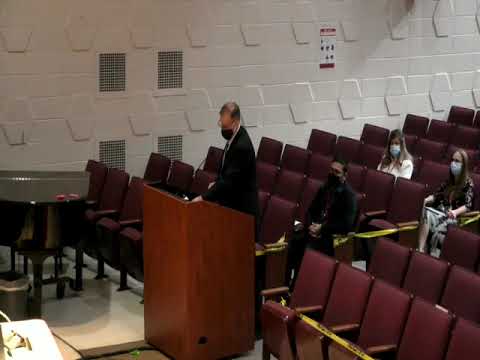
The Syosset Central School District Board of Education moved from discussion toward formal action on installing LED lights at the district’s new turf field after a sustained public-comment period in which dozens of residents urged the board to proceed.
Residents described Friday-night lights as a way to build community, allow later games when daylight is limited, reduce the need to bus teams to other facilities and expand access for girls’ and boys’ teams. “Having lights really makes it a lot more easier and better,” said Kareem Mazawalla, a parent with children in the district. Adam Waxer, president of the Syosset Youth Lacrosse Program, told the board that comparable nearby districts have approved lighting and that lights would create more year-round, safe use of the facilities.
The board and administration summarized the project scope and timeline. Superintendent (Dr.) Rogers and staff said conduit for future lighting was placed under the turf when that project was built, which preserves the playing surface and reduces later disruption. The administration estimated construction costs at about $650,000 for four roughly 80-foot towers and said LED fixtures (chosen for reduced scatter and lower energy use) have supplier lead times of roughly 8–12 weeks. The project requires New York State Education Department approval (architectural/engineering review); the district estimated SED lead times could range from ~10 to 40 weeks depending on workload.
Funding would require voter authorization: administrators outlined two common paths — (1) use of the district’s capital reserve (which requires a separate public vote to withdraw funds) or (2) including the project in the annual May budget vote. Either route triggers a public authorization step; administrators noted an earlier public vote would improve the district’s chance of completing the work in time for next fall’s season. The superintendent cautioned that long lead times for approvals and materials make an aggressive schedule challenging but not impossible.
Board President Tracy Frankel said she plans to make a motion to commence the project at the board’s next meeting so that the district can begin detailed planning and, if desired, place funding before voters. The board asked administration to produce options on funding, a security plan for evening events and a clearer timeline for SED review and bidding. The board did not take a final vote on the project at this meeting.
The next procedural step is a board motion (expected at the next meeting) to direct staff to prepare specifications and funding recommendations; any appropriation from the capital reserve or inclusion in the budget would later require voter approval.