
House panel advances bill to create labor‑aligned recognition pathway for private trade schools
Get AI-powered insights, summaries, and transcripts
Subscribe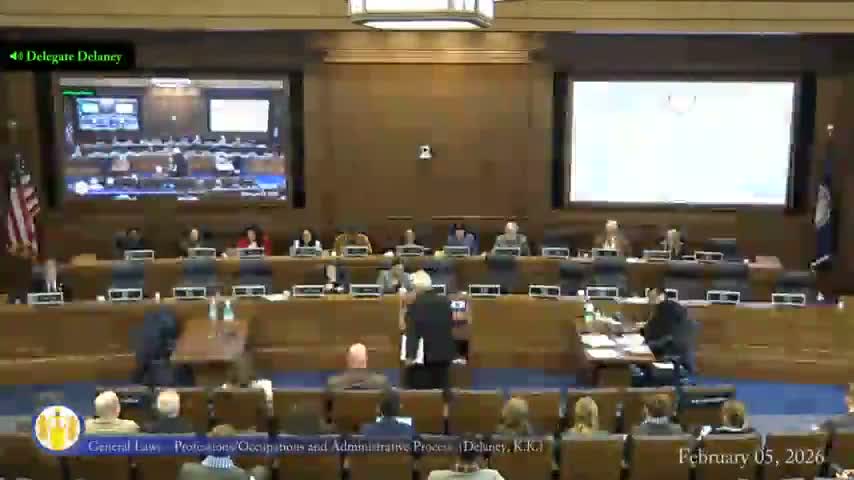
Summary
The subcommittee advanced HB 551 to create a labor‑aligned recognition pathway for private trade schools under Virginia Works, aiming to set uniform quality and hands‑on training standards while preserving community college and apprenticeship programs; supporters said it expands access for nondegree learners, opponents warned it could duplicate credentialing and needs more stakeholder work.
Delegate Anderson urged the subcommittee to adopt HB 551 to create a distinct recognition pathway for private trade and workforce training programs under Virginia Works and the Secretary of Labor. She said the bill sets minimum labor‑aligned standards — safety, hands‑on instruction and job readiness — without replacing community colleges or registered apprenticeship programs.
Supporters from business and training programs, including Virginia Technical Academy founder David Gillespie and representatives of the Peninsula Chamber of Commerce, said the measure responds to a gap for hands‑on learners who don’t fit traditional academic pathways. "This bill creates a second legitimate recognition pathway for trade schools," David Gillespie said, arguing it would help veterans, adults without diplomas and career changers enter in‑demand jobs. Multiple witnesses described real workforce needs and employer demand.
Opponents, led by the Virginia Manufacturers Association and the DC Metro Building Trades Council, urged caution. Brett Vassy of the Virginia Manufacturers Association said the bill "creates an entirely new system of government accreditation" and expressed concern that a single overlay would not fit the needs of diverse industries. Greg Ackerman of the Building Trades Council urged adherence to the long‑standing registered apprenticeship model and warned against creating incentives that could be used to preferentially route public funds or contract preferences.
Patron amendments (as presented in committee) clarified the bill removes language creating a funding pathway or the term "accreditation" that would overlap with existing programs and prevents private trade schools from accessing state apprenticeship PELs or FastForward funds. Patron and opponents indicated they will continue discussions about standards, on‑the‑job training requirements and alignment with apprenticeship rules.
On a roll call, the committee reported HB 551 with substitute and referred it to Appropriations by a vote of 6–3. The subcommittee recorded willingness among stakeholders to continue negotiations before the bill advances.
Next steps: HB 551 will be considered by the full committee and then, if reported, be evaluated by Appropriations for fiscal implications and any required implementation funding.