Tennessee Senate lets parties choose nominees for some judicial vacancies after missed primary deadline
Loading...
Summary
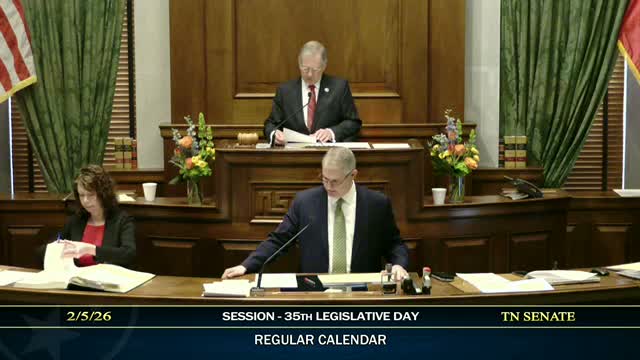
The Senate passed Senate Bill 367 with an amendment allowing political parties in multi-county judiciary districts to use caucuses to select nominees for vacancies that occur after the 180‑day primary-notice deadline or, if time permits, to hold a primary. Supporters said it protects voters; critics said notice and drafting were insufficient.
Senate Bill 367, which clarifies how vacancies in certain multi‑county judiciary districts are filled when they occur after the statutory primary‑notification deadline, passed the Tennessee Senate on final consideration after amendment.
Chairman Briggs, the bill sponsor, told the Senate the measure applies narrowly to vacancies in judgeships, district attorneys and public defenders in multi‑county judiciary districts and would give parties the option to either hold a primary (if petition and filing deadlines can be met) or to hold a party caucus to nominate a candidate that will carry the party designation into the general election. "Rather than a handful of people in a smoky room deciding who the candidates were going to be for a party, we said ... primaries where the citizens get to vote," Briggs said, arguing the change preserves voters’ ability to choose party nominees in unexpected vacancy situations.
Senator Yarbrough acknowledged he understood the bill’s purpose but sharply criticized the timing and clarity of the draft and public notice. "I think this is just kind of a messy, sloppy law," Yarbrough said, adding that affected parties and the public had little opportunity to review the changes before notice. He warned repurposing an existing caption and moving bills late in session made it hard for members and the public to understand consequences.
Briggs responded that the amendment addresses unanticipated vacancies and provides a workable mechanism that preserves a party label in the general election when appropriate. Senators from multi‑county districts confirmed the measure does not apply to single‑county districts such as Shelby County.
The amendment was adopted by voice vote; the bill as amended passed final consideration with a recorded tally of 29 ayes and no nays. The measure now moves to the processes specified by the legislature for enrolment and transmittal to the other chamber.
The Senate’s discussion also included an explanation that vacancies for Sessions Court judges are handled by county commissions and trial‑court vacancies are filled by the governor; the bill applies only to partisan judicial offices in multi‑county districts and only where the vacancy occurs after the 180‑day primary‑notification deadline.