
Committee advances SB205 to modernize Alabama one‑call damage‑prevention law
Get AI-powered insights, summaries, and transcripts
Subscribe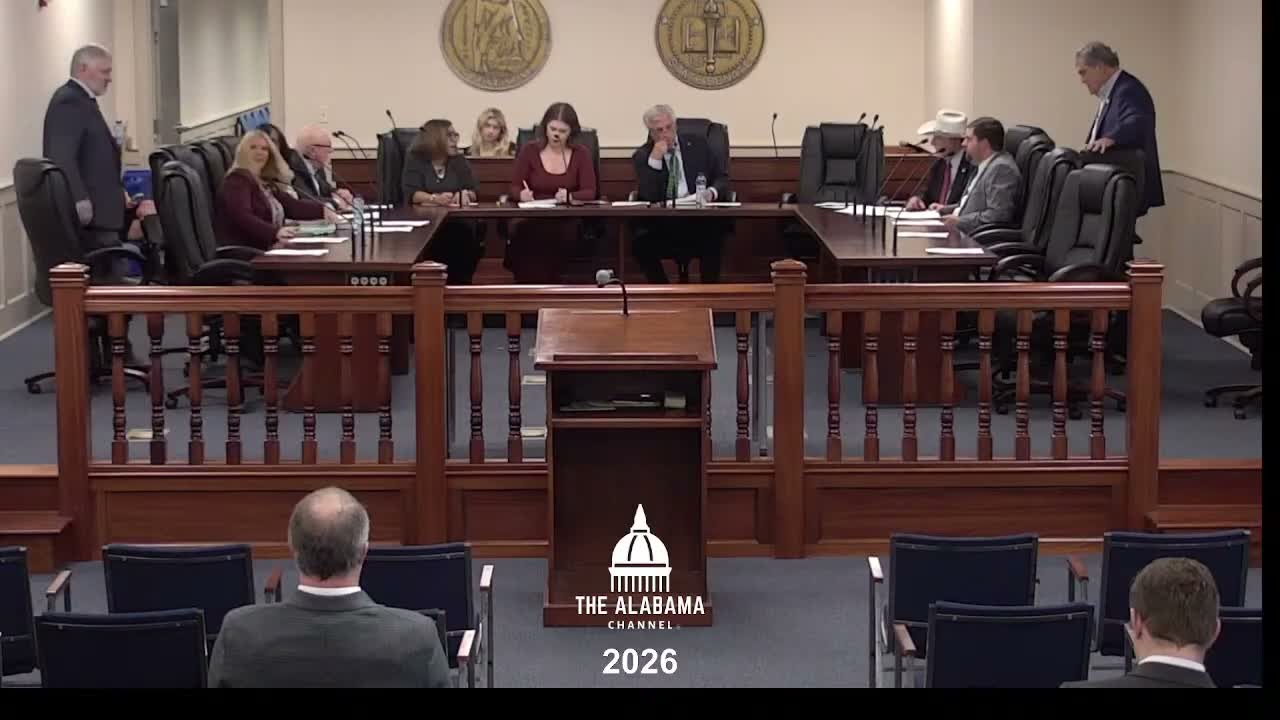
Summary
The Senate Transportation and Energy committee approved SB205, presented by Ross Gunnels of Alabama 811, to modernize the state's one-call (811) notification law. A friendly amendment added "marine construction" to the definition of excavation and clarified maintenance/right-of-way language agreed with ALDOT and the County Commission Association.
Committee Chair (Speaker 1) called SB205 at the start of the session and asked Ross Gunnels of Alabama 811 to explain the bill.
Ross Gunnels said Alabama 811 is the state's one-call notification system and summarized the law's purpose: "So it's required of any sort of excavation, commercial excavation, construction," adding that the statute exists "first and foremost [to] protect life" and to protect underground utility infrastructure amid large-scale broadband installation projects that have increased strain on the notification system.
Gunnels told members stakeholders had worked on the measure for roughly 18 months. He said the bill is intended to "update" and "modernize" the existing law and that he was "not aware of any opposition." He described the organization as composed of utility owners and emphasized public-safety and service reliability goals.
He also explained a friendly amendment negotiated after filing: it expands the definition of "excavation" to include marine construction and clarifies maintenance/right-of-way language following discussions with the County Commission Association and the Alabama Department of Transportation (ALDOT). Gunnels characterized the amendment as agreed by stakeholders.
Committee leadership moved to adopt the amendment and proceed with the bill. A second was recorded, and the clerk conducted a roll call. The transcript records multiple "Aye" responses (including senators identified on the record as Coleman, Kitchens, Weaver, Williams and Allen). The chair announced the bill approved. Later in the session an attendee raised a procedural point asking whether the committee had voted on the bill as amended; the chair confirmed the vote used the previous roll as amended.
The committee recorded the amendment and the bill as approved and moved on to the next item.
Next steps: SB205 will be transmitted according to standard committee procedures.