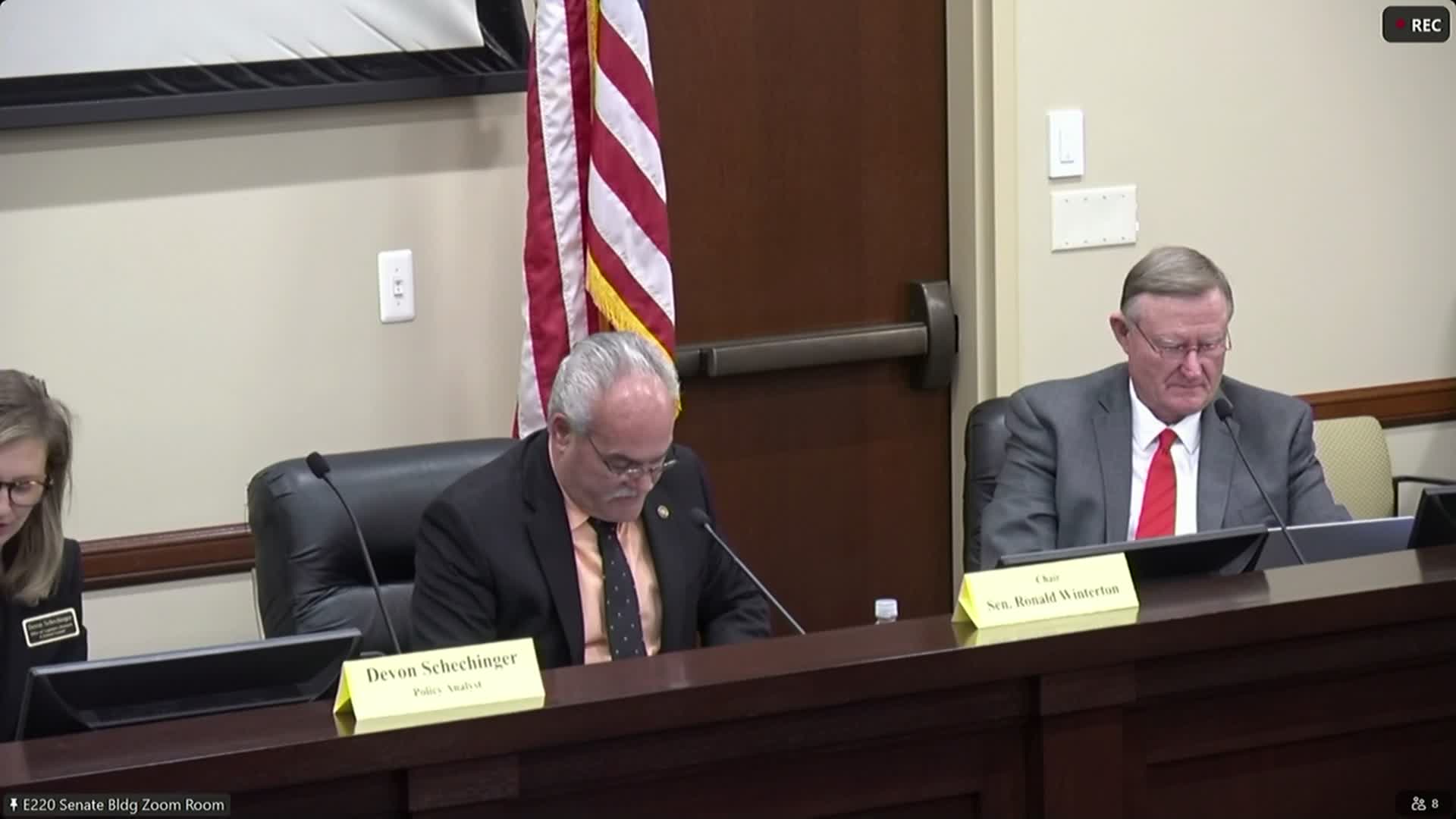
Committee sends substitute immunity bill for emergency medical services out favorably after wide testimony
Loading...
Summary
The Senate Government Operations Committee unanimously recommended a first substitute of HB 79 to clarify government immunity for emergency medical services, after supporters said the measure restores longstanding protections and opponents warned it could limit accountability in malpractice cases.
The Senate Government Operations Committee unanimously voted to favorably recommend a first substitute of House Bill 79, a bill that clarifies and restores the scope of government immunity for emergency medical services and first responders.
Representative Gwen, the sponsor, said the bill reaffirms what the legislature intended in the 1980s and restores protections that were altered by a recent Supreme Court decision. "This bill doesn't change anything," the sponsor said, describing the measure as a reassertion of prior statutory intent rather than an expansion of immunity.
Supporters included the Utah State Fire Chiefs Association, the Professional Firefighters of Utah and the League of Cities and Towns, who argued that reaffirming immunity preserves the ability of first responders to act without fear of crippling litigation. Draper City Fire Chief Clint Smith, representing the State Fire Chiefs, said the protections are necessary to avoid exposing responders to litigation for split‑second decisions.
Opposition testimony came from a medical malpractice attorney representing the Utah Association for Justice and other speakers who urged caution. Kira North said the bill was "broader than necessary," arguing that by insulating EMS providers from malpractice suits the bill could reduce incentives to meet accepted standards of care and could foreclose remedies for families in severe cases. A student witness and other commenters raised concerns about accountability and retroactivity.
Committee members discussed the tension between protecting responders operating in unpredictable, rapidly evolving environments and preserving channels for accountability. Senator Plumb, who works in emergency medicine, said first responders operate in uncertain conditions and urged support; other members noted the need to balance training, oversight and legal recourse.
After discussion and summations from the sponsor and committee leadership, the committee voted to recommend the first substitute unanimously. The sponsor said the bill is intended to "reassert" prior statutory construction clarified by legislative history and previous practice; opponents said the changed statutory language as drafted risked removing avenues for redress in serious malpractice cases.
With the committee recommendation, the substitute bill advances to the next stage in the legislative process.