
Iroquois County committee outlines conditions for two large solar projects amid drainage and decommissioning concerns
Get AI-powered insights, summaries, and transcripts
Subscribe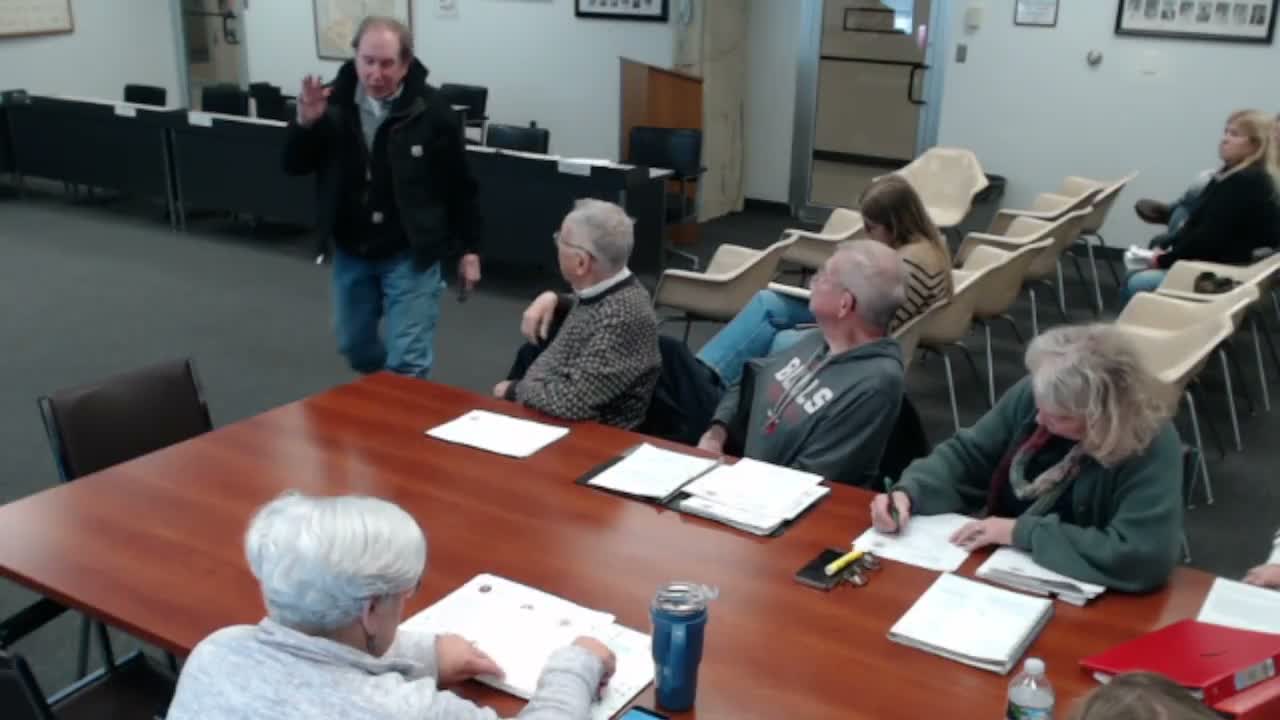
Summary
County attorney and planning staff told the Policy and Procedure Committee that two solar projects, including a roughly 4,000‑acre proposal, will go to the county board next week with draft conditions on decommissioning funds, drainage surveys, vegetative screening and emergency‑response reimbursements; nearby residents urged a delay until legally enforceable protections for district drain tile are provided.
Iroquois County’s Policy and Procedure Committee heard detailed briefings Feb. 5 on two proposed solar projects the county attorney said will appear before the county board next Tuesday, including one project described as roughly 4,000 acres.
In public comment, Martha Genzel, who said she was born and raised on a family farm in Iroquois County, asked the board to delay any building permit “until the solar company gives a sound assurance of what they're going to do with the district title,” and requested a court‑enforceable contract to protect drainage laterals and the main tile. Another resident who lives just north of a proposed site urged that conditions adopted at a prior meeting be satisfied before construction begins on what he described as a 30‑year project.
County Attorney (addressing the committee) summarized the zoning and conditional‑use process and outlined the draft conditions staff and the developer have discussed. On decommissioning, the attorney said state statute sets a phased minimum (10% of decommissioning cost for the first five years, 50% later and 100% by year 11), but the county has negotiated forms intended to produce stronger protections for the county—combinations of letters of credit and surety arrangements so the county can secure funds if the developer fails to perform. The attorney said the county is weighing tradeoffs between cash escrows and letters of credit and working with developers to craft enforceable language.
On drainage, staff and the attorney described requiring an aerial "flyover" (county engineer review of the flyover results) as an initial step; if county engineers determine more information is needed, developers must complete a traditional drain‑tile survey prior to building permits. The attorney said that approach preserves the county’s authority to require additional, on‑the‑ground investigation if the flyover is insufficient.
Planning staff also discussed vegetative screening and fencing. Developers will provide landscape and screening plans before building permits; the planning and zoning committee will review those plans and can require different species or denser buffers in locations adjacent to neighboring properties. Committee members emphasized that screening should be living and require replacement if plantings fail.
The attorney said developers must also coordinate emergency‑response planning with fire and EMS districts and reimburse emergency entities for incident responses at project sites.
No conditional‑use permit or building permit was approved at the committee meeting; the attorney told members the conditional‑use request and associated variances and conditions will go to the county board next week. The county’s planning staff and the drainage commissioners will continue to refine condition language, particularly regarding decommissioning form and drainage protections.
The committee did not make a final decision at the Feb. 5 meeting. Residents pressed for written, enforceable guarantees protecting district drainage tile; staff said they intend to include drainage‑survey conditions and landscape plans as part of the permit package the board will review next week.