Committee advances two bills to require medical emergency drills for developmental-disability providers and to sanction repeat violators
Loading...
Summary
The House Committee on Health and Human Services reported HB 13 70 (medical emergency drills) as amended and sent HB 13 80 (sanctions for repeated violations) to appropriations after debate about training, stakeholder input and enforcement. Advocates cited a Disability Law Center of Virginia report on delayed emergency responses.
At a full committee meeting, the House Committee on Health and Human Services advanced two related measures intended to improve emergency responses at providers serving people with developmental disabilities.
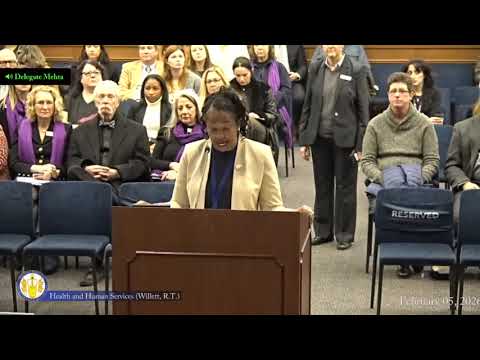
Delegate Mehta, patron of HB 13 70, said the bill would require development of regulations obliging providers to train employees to respond to medical emergencies and would add CPR training and consideration of mental health and substance-use disorders to required drills. "Emergency medical drills are crucial for reducing response times, improving team coordination, and building muscle memory," Mehta said, explaining the purpose of the line amendments.
Colleen Miller of the Disability Law Center of Virginia told the committee her organization reviews "about 10,000 of those reports every year" and that a review of hundreds of unexpected community deaths showed delayed or inappropriate responses by staff in many cases. "The training that is going on right now is costing lives," Miller said, urging regulations that include simulation and practice drills.
Delegate Douglas Seabold, sponsor of HB 13 80, said his bill goes further by instructing the Department of Behavioral Health and Developmental Services to impose sanctions for repeated violations by licensed facilities. "When providers repeatedly fail to protect the people in their care, there are real and enforceable consequences," Seabold said, arguing sanctions are needed to prevent foreseeable, repeated harm.
Jennifer Fedura of the Virginia Network of Private Providers said her organization is "not opposed to the bills" and to "the idea of further training for staff," but asked that the provider community have a seat at the table when regulations are developed. She also noted that existing sanctions in the code could be used if appropriate.
Procedurally, the committee reported HB 13 70 as amended (the amendments add CPR and mental-health and substance-use considerations) by a recorded vote of 20 to 1. The committee moved to report HB 13 80 and to refer it to appropriations; the chair later recorded the vote as 19 yeses and 2 noes. Both measures will next proceed through the legislative process where rulemaking language and any fiscal impacts will be further vetted.
Supporters said the bills respond to systemic patterns identified by the Disability Law Center of Virginia and aim to standardize emergency-preparedness training. Opponents or provider representatives sought assurance that rulemaking would include provider input and noted concerns about costs and implementation details; no organized opposition emerged at the committee hearing. The committee adjourned after completing its business.