Get Full Government Meeting Transcripts, Videos, & Alerts Forever!
Get email alerts on the Family Law topic
No spam. Unsubscribe anytime.
Committee hears bill to create judicial pathway for recognizing common‑law unions; members urge legal review
Summary
Lawmakers discussed a bill to allow judicial declarations recognizing common‑law marriages in specified circumstances. Senators raised concerns about post‑death claims, evidentiary burdens and unintended effects on benefits and taxes; the author and committee agreed to solicit input from the Attorney General and Bar Association and to refine the draft in markup.
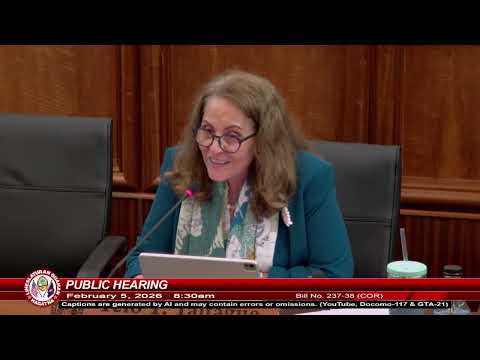
The committee heard opening remarks Feb. 5 for bill 221‑38, which would add a judicial declaration process for limited recognition of common‑law marriages in Guam.
Author Senator Shelley Calvo said the bill is intended to provide a narrowly defined, court‑supervised route for recognition where couples "meet established standards and function as families in practice," for example when custody, inheritance or medical decision‑making issues arise after long cohabitation. Calvo emphasized the bill does not create automatic recognition and places the decision in the hands of the judiciary following sworn affidavits and evidentiary review.
Several senators urged caution. One committee member noted the risk of post‑mortem claims and difficulty proving mutual intent years after a relationship ends. Another observed that existing legal tools (deeds, estate planning, formal marriage) can address many concerns and recommended legal‑aid assistance so cohabiting partners can secure protections proactively. The attorney general had marked opposition on the sign‑in sheet and the panel agreed to request his written testimony and consult the Guam Bar Association before markup.
The author said she welcomes additional testimony and will work with stakeholders to tighten definitions and evidentiary requirements. The committee left the record open for five working days for written comments and closed the hearing on the bill.