Get Full Government Meeting Transcripts, Videos, & Alerts Forever!
Get email alerts on the Appointments topic
No spam. Unsubscribe anytime.
Charter panel advances proposal to limit single‑party dominance on appointed boards
Summary
The New Canaan Charter Revision Commission’s Group 1 voted to send a draft change limiting maximum single‑party representation on appointed boards to the full commission for review. The proposal would leave elected‑body rules to state statute and aim for a phased transition to reduce disruption.
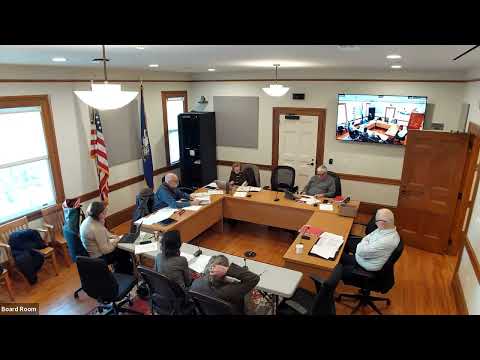
The Charter Revision Commission (Group 1) voted Feb. 4 to forward a proposed change that would reduce the ability of one political party to hold a supermajority of seats on appointed boards and commissions.
Chair Angela Jameson presented draft slides showing Connecticut’s current minority‑representation rules (citing general statute chapter 9‑167a) and compared local practice with neighboring towns such as Westport and Fairfield, which limit any single party to a bare majority on appointed bodies. Jameson told commissioners the change would apply only to appointed boards and commissions and would not alter the state‑statute‑based rules that govern elected bodies.
The proposal includes two parts, Jameson said: (1) revise Article 2 to add a limit for appointed bodies, and (2) optionally repeat that language in each charter article describing individual appointed boards. She recommended a phased implementation — for example, a two‑year delay or waiting until incumbents’ terms expire — so current members are not summarily displaced.
Commissioners pressed for implementation details. Steve Case and others asked how the change would affect seven‑ and five‑member boards and whether committees or subcommittees should be covered. Commissioners noted parks and recreation and conservation commissions could be impacted; parks and recreation has staggered three‑year terms while conservation terms are two years.
Joe Paulo moved a procedural motion — not final approval of language — to send the draft to the full Charter Revision Commission for review; Steve Case seconded. The motion passed on voice vote; one commissioner indicated she would abstain on substantive content later. The Group 1 vote advances the draft for broader discussion and legal review before any charter amendment is finalized.
The commission directed staff to: confirm statutory cross‑references, compute which boards would be affected under the proposed limits, and present suggested transitional language (grandfathering or phased implementation) to the full commission.