Get Full Government Meeting Transcripts, Videos, & Alerts Forever!
Get email alerts on the Urban Infrastructure topic
No spam. Unsubscribe anytime.
Local SYNLawn representative urges Palm Coast to rethink artificial turf rules; staff asks for testing
Summary
During public comment, a SYNLawn representative asked the city to treat modern artificial turf as pervious, citing high drainage rates and reduced irrigation and chemical use; city staff said long-term clogging is a concern and requested documentation and engineering review.
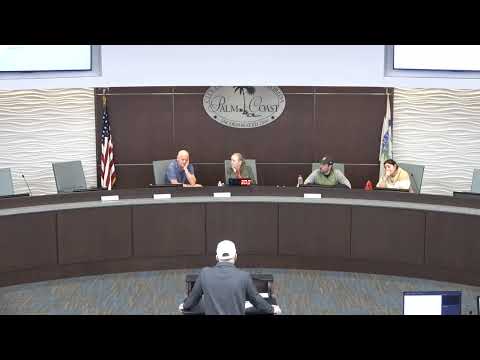
During the public-comment portion of the advisory-board meeting on Jan. 22, Danny Barnes, a representative of SYNLawn, asked Palm Coast staff to reconsider treating modern artificial turf as pervious rather than impervious.
Barnes told the board his company’s commercial and residential turf systems can allow "drainage rates exceeding 30 inches per hour," saying properly installed base systems channel water into permeable sub-bases and reduce the need for irrigation and fertilizers. "When evaluated based on drainage performance, water conservation, [and] chemical reduction, modern artificial turf systems often outperform equal or better than natural grass," he said, and asked the city to consider demonstrations or an approved-product list.
City staff acknowledged the potential benefits but said stormwater engineers worry about durability over time. Rick (staff presenter) noted that while some turf systems are very pervious at installation, "after months or years when dust flies and dirt and sand go through storms and they start to fill in all the little pores... it changes from pervious to impervious." Staff asked Barnes to provide testing and maintenance protocols and said the city previously invited demonstrations and would share materials with its stormwater engineers.
The exchange ended with staff requesting a package of technical documentation and test results and offering to review the material with the committee and stormwater staff. No regulatory change or formal request to amend the code was decided during the meeting.