Get Full Government Meeting Transcripts, Videos, & Alerts Forever!
Get email alerts on the Vacant Parcels Redevelopment topic
No spam. Unsubscribe anytime.
Committee reviews 14 city-owned parcels and eyes redevelopment options for 45-acre Baptist site
Summary
Members examined 14 city-owned vacant parcels for possible affordable-housing uses, debated sell-vs-develop tradeoffs on small infill lots (example: 414 East Blunt St.) and emphasized the development potential of the 45-acre Baptist Legacy Campus; Pensacola Habitat outlined recent land donations and land-trust activity.
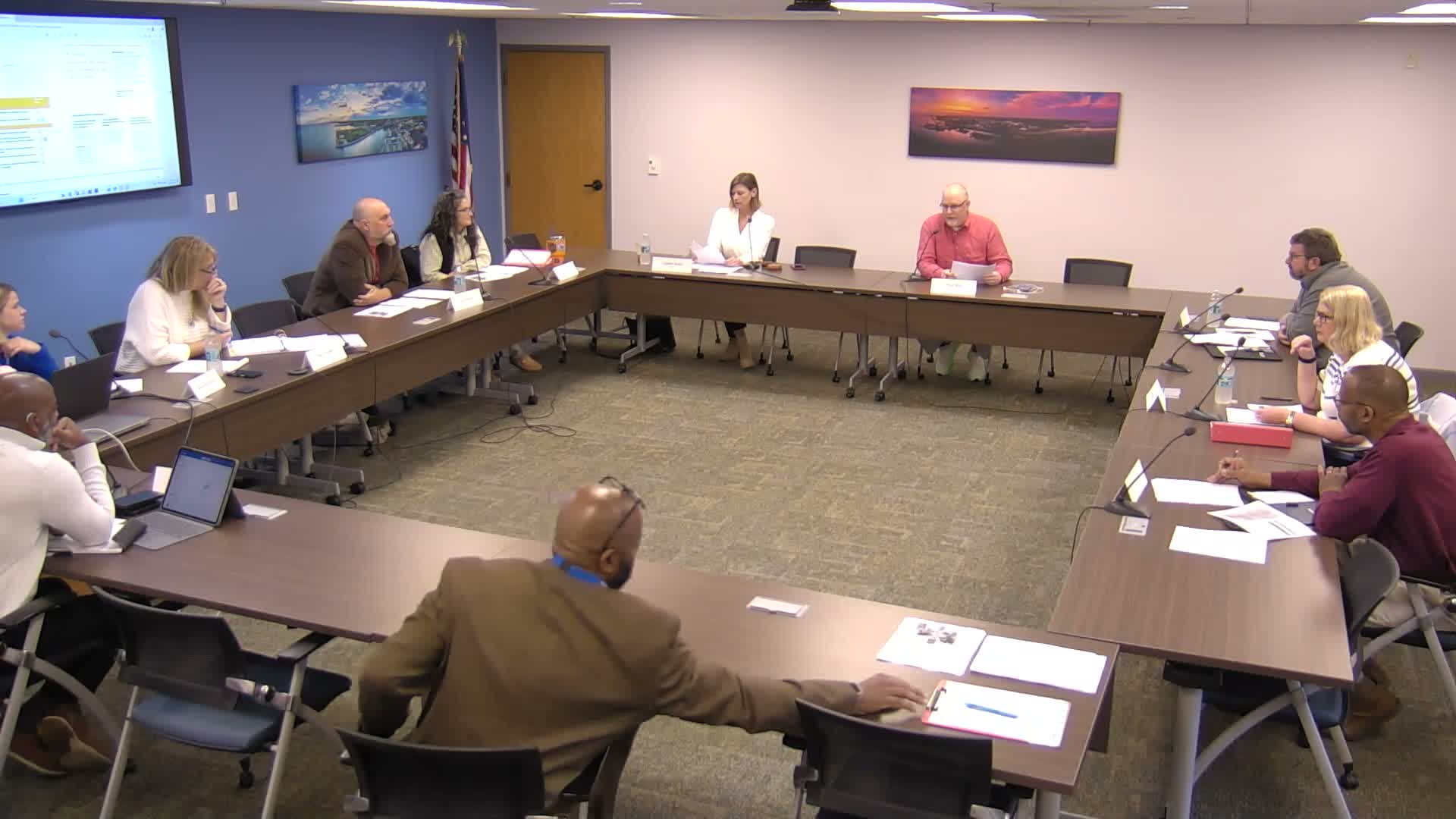
The City of Pensacola committee spent the meeting reviewing a packet of 14 city-owned vacant parcels and discussing options for disposition, disposition policy changes and redevelopment pathways, including transfer to a community land trust or targeted redevelopment with public incentives.
Paul Ritz flagged small infill parcels that may be legally buildable but contextually awkward — citing 414 East Blunt Street as roughly "21 feet wide" with an existing dilapidated house — and asked whether the city should sell such parcels, donate them to adjacent owners, or use proceeds for concentrated affordable-housing investments. Members repeatedly urged in-person site visits to understand neighborhood context before making recommendations.
Councilman Larry Wiggins highlighted larger redevelopment potential at the former Baptist Legacy Campus, describing it as a major city opportunity. "Baptist is what, Cliff? 45 acres?" Wiggins said, later reiterating the site's scale and urging committee members to get involved in community engagement and CRA meetings about what should go on the campus.
During public comment, Sam Young, CEO of Pensacola Habitat and the Northwest Florida Community Land Trust, thanked the city for recent donations, described how proceeds from prior county transfers were used for new affordable homes, and summarized how the SHIP surplus-land statute is intended to drive municipal lists for affordable housing but lacks robust enforcement. "The statute requires...they need to promulgate a list of all municipal owned...property that has been deemed appropriate for affordable housing," Young said, and noted that enforcement is weak.
Why it matters: Committee members said clarifying disposition authority and disposition policy will affect whether parcels become long-term affordable housing, private market sales, or other uses. For larger sites such as the Baptist campus, members said mixed-income and rental options should be considered and community engagement steps scheduled.
Next steps: Staff will continue research on decision authority for city-owned parcels, keep the parcel review as a standing discussion item, invite CRA and county staff as needed, and organize site visits and community engagement as redevelopment plans take shape.