Get Full Government Meeting Transcripts, Videos, & Alerts Forever!
Get email alerts on the Housing Incentives topic
No spam. Unsubscribe anytime.
Pensacola committee links Strive to Thrive goals to housing incentives, CRA readies ADU pilot
Summary
Committee members reviewed the Strive to Thrive housing goals and discussed aligning the city’s incentive plan and SHIP funds to promote affordable rental housing and ADUs; the CRA outlined a pilot rental program offering roughly $75,000–$100,000 per unit in flexible financing.
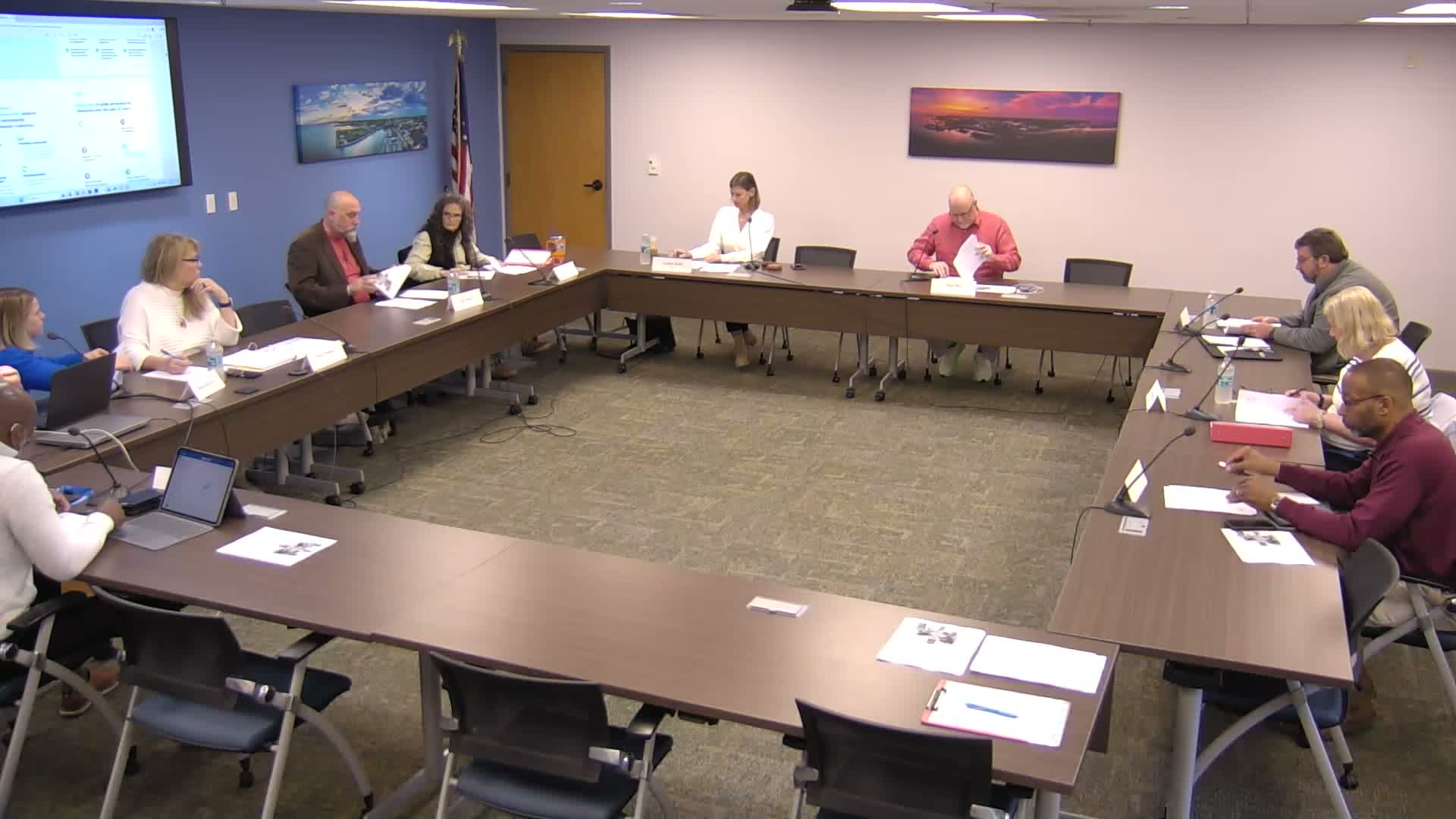
The City of Pensacola housing committee on Dec. 1 reviewed the Strive to Thrive strategic plan and recommended aligning the committee’s incentive strategies and available SHIP funds with the plan’s housing priorities.
Betsy McDonald, housing director, said the Strive to Thrive plan highlights housing as the top priority and urged the committee to consider overlay districts and incentives that support rental development at 60% of area median income and below. "I really wanted us to start thinking about Strive to Thrive and how it intersects to our incentive plan," McDonald said during the presentation.
Why it matters: Committee members said tying incentive programs to an adopted strategic plan could help focus limited resources on neighborhoods and project types intended to yield long-term affordability. Members also pressed staff on how SHIP dollars can be used for rental projects and whether changes require a technical or full LHAP amendment that could need city council approval.
Tracy Pickens, City of Pensacola housing staff, said SHIP funds have been used for rental projects but typically in coordination with county interlocal agreements and large developments, and cautioned that rental programs require administrative capacity and long-term compliance. "It is used and it's something we certainly could explore... since we're now a stand alone, it would be on a probably a pretty small scale," Pickens said.
The city’s Community Redevelopment Agency (CRA) previewed a planned small-scale rental and ADU program aimed at expanding affordable rental supply. Hillary Hallford, CRA programs officer, told the committee the program would be flexible and pilot-based, with funding targeted "anywhere between $75,000 to a $100,000 in funding per unit," structured as low-cost or deferred loans intended to form a revolving loan fund.
Committee members discussed practical barriers to ADU expansion — higher per-square-foot costs on small projects and landlord concerns about evictions and tenant performance — and proposed follow-up briefings from planning, the CRA and other partners to refine incentive design and implementation. Paul Ritz urged members to visit example parcels to understand context and buildable footprints before making recommendations.
Next steps: Staff will share the Strive to Thrive plan and Cliff Collins’s brief with the committee and schedule follow-up presentations from planning and CRA staff. The CRA expects to bring its program and related procurement for a financial partner to its board in January for approval.