Story County reviews facilities budget, flags aging HVAC, EOC remodel and security transfers
Loading...
Summary
At a Feb. 5 facilities budget work session, Story County staff outlined operating and capital requests across county buildings, highlighting replacement needs for a 25-year-old chiller and ongoing heat-pump work, a planned EOC remodel, and transfer of camera monitoring costs to IT.
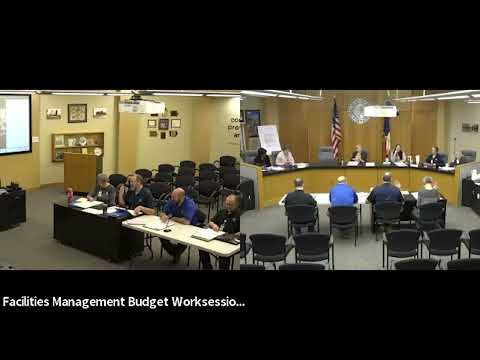
Story County officials met Feb. 5 for a facilities management budget work session to review operating lines and capital projects across county properties, focusing on equipment nearing end of life and several one-time expenses proposed for the next fiscal year.
Joby Brogdon, facilities management director, led the presentation and said much of the requested increase in the administration building budget stems from the water-to-water chiller and recent HVAC issues. "This is what heats and cools the incoming fresh air from the ERV for this building," Brogdon said of the chiller, noting it is at the 25-year mark and manufacturers have stopped supporting certain refrigerants. "I would like to replace it before we lose it," he said, explaining that recent EPA refrigerant changes make parts and compatible equipment harder to source.
Brogdon also summarized recurring maintenance and operating lines: overtime (largely driven by snow removal), custodial supplies, elevator maintenance, and geothermal closed-loop water treatment testing. He said the department plans to keep a contingency for heat-pump compressor failures after several recent compressor replacements and supply-chain delays for replacements.
Capital items discussed include a planned emergency operations center (EOC) remodel—Bro gdon estimated a $200,000 construction cost with an audiovisual portion shared by the Emergency Management Commission—and an elevator study the county would commission to determine ADA-driven upgrade requirements. Brogdon said the elevator study was budgeted conservatively at about $60,000 to secure professional guidance before committing to large CIP work.
Security and IT transitions were also covered. Brogdon said the county is moving camera system monitoring fees to the IT budget and will supply more precise monitoring costs for the auditor to reflect in this budget, while keyless entry and panic-button monitoring remain in facilities until final numbers are confirmed.
The board and staff discussed several other line items—file-room reconfiguration to create a secured records area, directory-sign replacement, and the replacement of worn windows with blown seals—and asked clarifying questions about utility exposure, service contracts and the timing of multi-year CIP projects.
County staff will update final monitoring fees and other carryover-line items before the budget is finalized and confirmed that larger capital items likely would be handled through the CIP process in FY27.