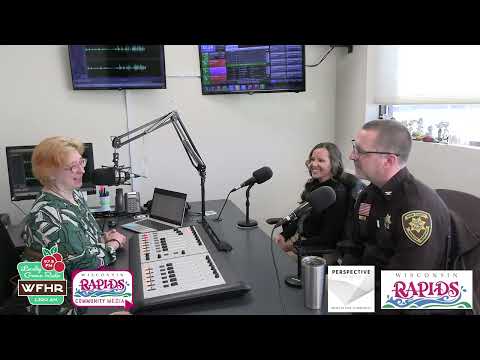
Wood County adds grant-funded deflection specialist to divert low-level offenders into services
Loading...
Summary
Coordinated response specialist Charit DiFabio described a grant-funded Deflection Care Initiative that offers voluntary, confidential diversion for low-level charges, partnerships with public health and 3 Bridges, and about six months of case management to connect people to housing, treatment and job support.
Wood County has added a grant-funded coordinated response specialist to launch a Deflection Care Initiative aimed at diverting people with low-level offenses into treatment and services instead of immediate prosecution, the specialist told WFHR.
"Ultimately, it's a partnership where we're working with our public health department, with all of our law enforcement agencies, with our hospitals," Charit DiFabio said, describing the program's collaborative model. DiFabio said Wisconsin currently has few state-level deflection initiatives and that the new position grew from a state grant opportunity.
How it works: DiFabio said the program establishes two pathways, including an "officer intervention" pathway where officers can hold low-level charges (examples she gave included misdemeanors, drug paraphernalia, possession of THC, obstruction and disorderly conduct) rather than immediately referring the case to the district attorney, provided the person consents to voluntary services.
Peer supports and partners: DiFabio said peer support specialists with lived experience will provide connections, and Wood County will partner with public health for harm-reduction activities (needle exchange, Narcan distribution) and with 3 Bridges for housing assistance, job skills and regular check-ins.
Confidentiality and duration: DiFabio emphasized that participation is confidential, that releases of information will be used when the client agrees, and that case management is expected to last about six months but can be shortened or extended to meet individual needs.
DiFabio encouraged residents with questions to contact the Wood County Sheriff's Department and ask for the coordinated response specialist. The hosts closed the interview and thanked guests.