
Panel approves centralized intake, 24-hour response measure for youngest children after hearing widespread screening disparities
Get AI-powered insights, summaries, and transcripts
Subscribe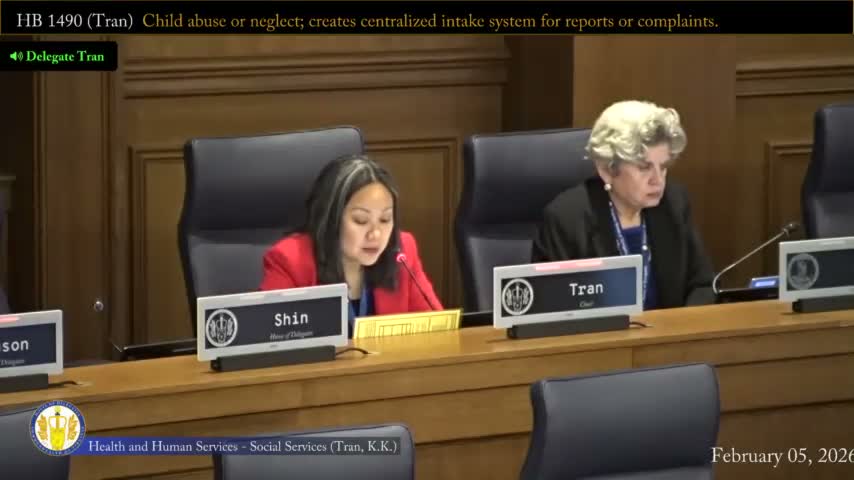
Summary
The subcommittee voted to report HB1490 (as substituted), directing the Department of Social Services to operate a 24/7 centralized intake and validity determination system for child-abuse reports and requiring a 24-hour response for valid reports involving children under 3 and children with disabilities.
Delegate Tran presented the substitute for House Bill 14 90, saying it establishes a statewide centralized intake and validity-determination process for reports of child abuse and neglect and requires a 24-hour response for children under age 3 and children with disabilities. Tran said 40 percent of calls already come through the state and that centralizing intake would improve consistency; she contrasted Virginia's screening-out rate with the national average: "Statewide, Virginia screens out 61 percent of referrals compared to the national average of 43 percent," she said, calling the variation a systemic failure.
Carl Ayers, Deputy Commissioner for Human Services at the Department of Social Services, urged the committee to support the bill as part of broader reforms and noted stakeholder work to implement phases. Testimony from parents and ombudsman officials emphasized cases where local screening decisions led to missed follow-up and urged a consistent statewide process to detect patterns and reduce child fatalities.
Supporters said the bill would bring Virginia in line with other states that operate centralized intake systems and would standardize training and validity determinations. The substitute phases implementation and creates a stakeholder workgroup to help set best practices. The committee voted to report the substituted bill and refer it to appropriations; proponents said the change aims to reduce the number of screened-out valid referrals and to ensure consistent, timely responses for the Commonwealth's most vulnerable children.