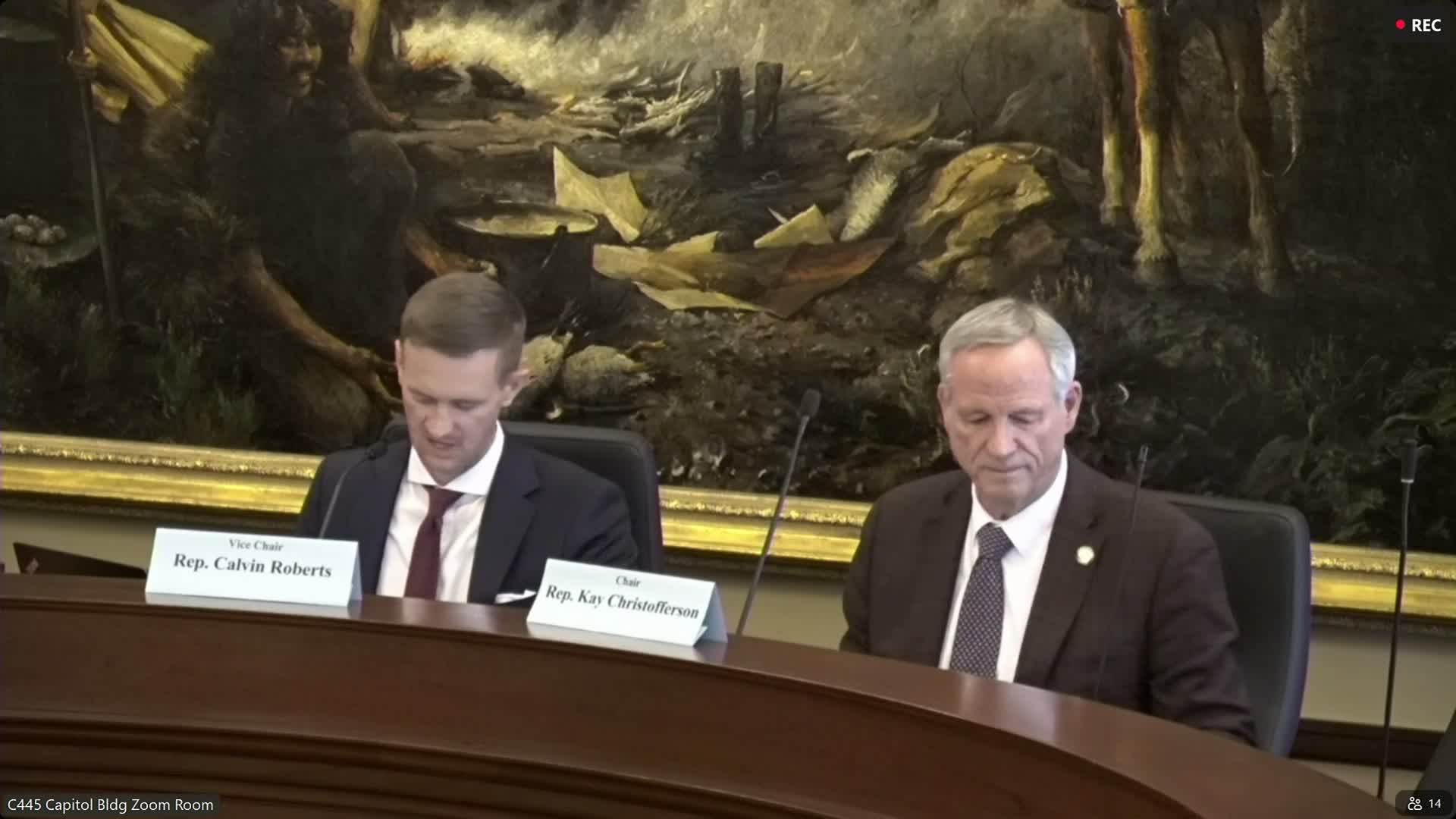
House Transportation committee holds HCR 7, delaying final legislative approval of Zion Scenic Byway plan
Loading...
Summary
The committee voted 8–2 to hold HCR 7 so members can review the Zion Scenic Byway corridor management plan before final legislative concurrence. Sponsor Representative Lisonbee and the Zion Regional Collaborative emphasized local support and that the plan is publicly available at zioncollab.org.
Representative Karianne Lisonbee introduced HCR 7, a concurrent resolution to approve the corridor management plan for the Zion Scenic Byway, and asked the House Transportation Committee to concur with local jurisdictions on the final plan.
Emily Friedman, coordinator for the Zion Regional Collaborative, told the committee the byway (State Route 9 from I‑15 through Hurricane to US‑89) has been a state scenic byway since 1990 and that stakeholders updated the corridor management plan in 2024 after community workshops and inventories of archaeological, cultural, historic, natural and recreational assets. “There is a written plan, and we'd be happy for everyone to take a look at it,” Friedman said, adding the document is posted on zioncollab.org.
Mayor Barbara Bruno of Springdale described the local economic benefits of including the SR‑9 stretch through Hurricane and the east side of Zion National Park into Kane County in the plan. “State highways attract cultural and heritage tourists who tend to stay longer and spend more money at our local businesses,” Bruno said, urging the committee to consider the consensus built among the municipalities and counties along the corridor.
Several committee members said they had not had time to review the written corridor plan. Representative Kristofferson said approving the plan without seeing it felt like “putting the cart before the horse.” Emily Friedman and Representative Lisonbee explained that Utah code requires legislative concurrence for corridor management plans but that local jurisdictions and both counties had already approved the updated plan.
Representative Chevrier moved to hold HCR 7 so members could read the plan before voting; the motion passed 8–2. Committee members asked staff to circulate the plan and return the item to the agenda for a future meeting.
The committee’s action does not change the local approvals already obtained by the municipalities and counties along the byway; it only postpones the legislature’s formal concurrence until members have time to review the written corridor management plan.