Get Full Government Meeting Transcripts, Videos, & Alerts Forever!
Get email alerts on the Noise Ordinance topic
No spam. Unsubscribe anytime.
Parker council narrows proposed noise ordinance hours, keeps daytime limit at 75 dB and sets 58 dB at night
Summary
After a public workshop and dozens of public comments, Parker City Council amended proposed hours for a new noise ordinance and voted to keep a 75 dB daytime limit while setting a 58 dB nighttime limit; council also approved a follow-up workshop to refine remaining language.
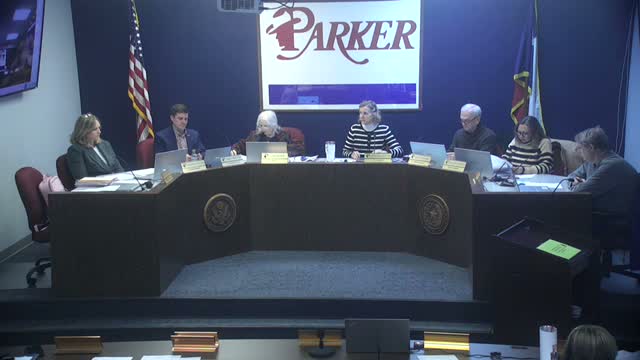
Parker's City Council spent its Dec. 2 meeting on a closely watched proposed noise ordinance, voting to amend daytime/nighttime hours and to set the daytime decibel limit at 75 and nighttime at 58 as part of a multi-step process that will return for additional review.
The workshop and subsequent meeting drew repeated public comment from residents on both sides of the issue, particularly owners of larger rural lots who said open land carries sound and homeowners who said existing limits have failed to protect sleep and livability. Mayor Pro Tem Buddy Pilgrim opened discussion by warning councilors and residents that decibel numbers are logarithmic: "cutting the decibels from 75 to 65 ... represents about a 50% reduction in the amount of noise," he said, arguing that large numerical drops have outsized perceptual effects.
The council first voted to amend proposed ordinance 8-94 on hours, making daytime hours Sunday through Thursday 7 a.m. to 10 p.m. and Friday and Saturday 7 a.m. to 11 p.m.; that amendment passed 5-0. An early motion to set daytime/nighttime levels at 70/60 dB failed. Council then voted to set the daytime decibel level at 75 dB (motion passed with a recorded split: Daryl Sharp, Colleen Halbert and Buddy Pilgrim in favor; Billy Baron and Roxanne Bogdan opposed) and set the nighttime limit at 58 dB (motion carried 4-1, with Halbert recorded as dissenting).
Public comment framed much of the debate. Laura Mawhinney Walsh, who described repeated neighbor noise incidents and many calls to police, said "75 is too loud" and urged stronger tools for enforcement; several rural-property speakers noted that farming equipment, generators and water features can push readings at long distances and asked for more complaint data. Others urged greater police discretion and raised concerns about notice and process; some speakers asked the council to put the final ordinance to a municipal ballot.
Council members debated measurement and enforcement mechanics. Several members and staff noted the draft would standardize on A-weighting and does not include frequency-based limits that would isolate bass or low-frequency vibration, which some residents cited as the hardest-to-measure source of disturbance. Council discussed a two-tier approach: objective decibel thresholds for large commercial events and scope for police discretion on neighbor-to-neighbor complaints. Sergeant Burdick and council members emphasized practical enforcement limits, noting the city lacks calibrated environmental-frequency equipment and that many phone apps are not suitable for official citations.
To finalize the ordinance text, Pilgrim moved and the council voted unanimously to hold another workshop focused on the "remaining language" of the proposed ordinance (the council clarified the workshop will not re-open items already decided at this meeting). Staff were asked to prepare an updated clean draft and redline for public review before the next workshop.
What happens next: the council approved changes to the proposed hours and decibel levels and scheduled an additional workshop to refine remaining language and staffing details before any final ordinance vote.