
Virginia subcommittee advances labor study on autonomous vehicles and hears major industry support for framework bill
Get AI-powered insights, summaries, and transcripts
Subscribe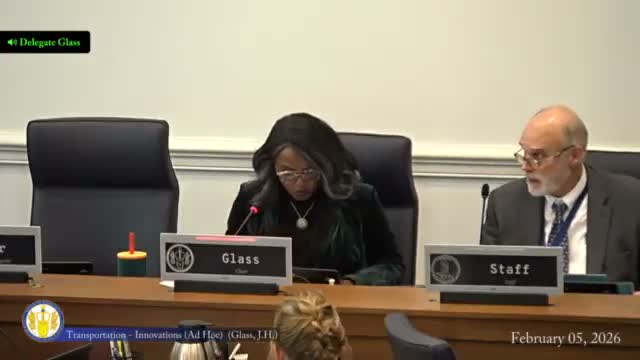
Summary
The House Transportation Subcommittee reported a study amendment to HB 11‑24 on labor impacts of autonomous vehicles and heard extensive testimony on HB 11‑25, an industry-backed framework for commercial autonomous vehicle deployment; HB 11‑25 was passed by for the day to allow further negotiation.
The House Transportation Subcommittee on Friday advanced a labor-study amendment to HB 11‑24 and took extended testimony on HB 11‑25, a substitute that would create a statewide regulatory framework for commercial autonomous vehicles.
Delegate Delia Clark introduced HB 11‑24 and the amendment, saying the change creates “a work group convened by the Secretary of Transportation to ensure that the auto manufacturer industry and the labor representatives … are at the table to negotiate and to also conduct an assessment on labor impacts” and produce a report by Nov. 1, 2026. Clark said the amendment keeps the bill focused on public safety while ensuring stakeholder participation. “It does not ban autonomous vehicles. It does not stifle innovation, and it does not pick winners or losers in the marketplace,” she said to the subcommittee.
Separately, Delegate Reid presented HB 11‑25, a substitute bill that sets definitions tied to SAE Level 4 and 5 autonomy, assigns DMV rule‑making responsibilities and envisions a task force to settle operational details including geofencing and weight classes. Reid said Virginia should borrow lessons from “26 other states” that have already adopted AV frameworks and use existing code where possible so rules remain adaptable as technology changes.
The committee heard more than a dozen speakers for and against the bills. Disability advocates from the National Federation of the Blind and the American Council of the Blind said autonomous vehicles could expand mobility for people who face ride denials today; Stuart Prost of the National Federation of the Blind both warned about proposals that require a human driver and spoke in favor of the framework when it improves accessibility. Industry groups and developers — including representatives from Waymo, Aurora, STACK AV and the Autonomous Vehicle Industry Association — urged lawmakers to adopt a clear framework so companies can deploy safely and consistently in Virginia.
Opponents including the Virginia Trial Lawyers Association urged more work on licensing, insurance and forced‑arbitration protections before the state grants broad authority, and asked to be included in task‑force conversations. The sponsor and committee members repeatedly said the substitute is a starting framework, not the final regulatory package, and that further refinements would occur in the full committee and during DMV rule‑making.
Action: The subcommittee reported HB 11‑24 as substituted (work group/study) on an 8‑2‑0 vote and took HB 11‑25 “by for the day” to allow continued negotiation and task‑force participation.
Next steps: The sponsor said she will continue stakeholder talks as the substitute moves to the full committee and then to DMV rule‑making.