Get AI Briefings, Transcripts & Alerts on Local & National Government Meetings — Forever.
Subcommittee approves sweeping energy-storage bill to expand Virginia’s storage goals and oversight
Loading...
Summary
HB 895 would raise energy-storage targets, require safety and procurement processes, establish model ordinances, add SEC oversight and require at least 20% of long-duration storage in the Coalfield region; the subcommittee voted 6–2 to report the substitute and refer to Appropriations.
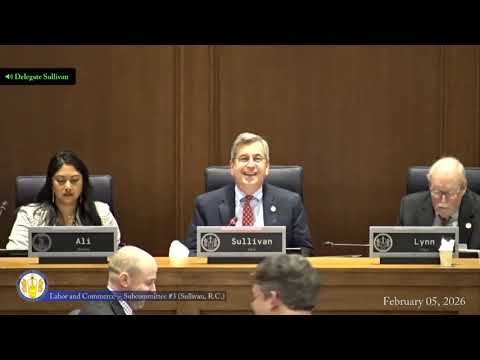
Delegate David Sullivan presented a broad substitute to HB 895 that would accelerate and expand Virginia's energy storage targets, require national fire-safety compliance for eligible projects, create a model (non-mandatory) ordinance for localities, strengthen Virginia Department of Energy support, authorize SEC oversight and cost auditing, and count pumped-storage investments toward long-duration targets. Sullivan said energy storage "will create direct cost savings to Virginia's ratepayers" and described comparisons to Texas and Illinois where storage deployment has reduced rates and outages.
Stakeholders across industry, labor, environmental groups and the administration testified in support. Kristen Dahlman, Deputy Secretary of Commerce and Trade, said the administration strongly supports the bill as part of a comprehensive energy strategy. Dominon Energy and Appalachian Power welcomed the collaborative drafting but raised safety concern nuances; Dominion stressed they "do not compromise on safety" and urged SCC review of standards. Fluence, battery manufacturers and labor representatives testified in support of scaling deployment.
Opponents and skeptical witnesses, including a manufacturing/industrial representative, warned about the potential construction volume, overall price tag (a figure of $62 billion was cited in testimony), and the importance of preserving dispatchable capacity for industrial customers. Sullivan responded that the bill includes SCC oversight and mechanisms to adjust goals if necessary.
The subcommittee voted to report the substitute and refer HB 895 to Appropriations by a vote of 6–2.
What happens next: The substitute proceeds to Appropriations with provisions requiring additional SCC rulemaking and work groups to develop model ordinances and incentive recommendations; if enacted, the bill aims to materially increase storage deployment and target regional investment in the Coalfield area.