City engineers recommend aerated‑lagoon approach for wastewater upgrade; cost rises to about $28.3 million
Loading...
Summary
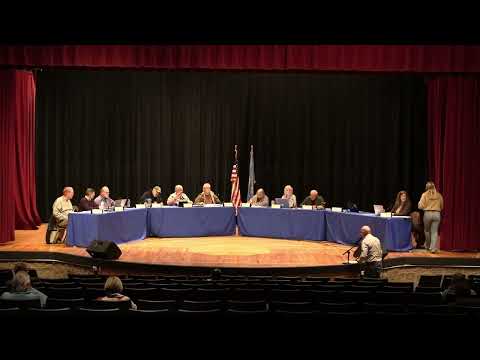
Consultants recommended amending the wastewater facility plan to build aerated lagoons at existing reservoirs and replace the aging outfall pipe; capital costs are now estimated at roughly $28.3 million with lower annual O&M relative to earlier alternatives. Council set a public hearing for 02/17/2026.
City consultants presented an amended facility plan that would keep discharge on the city’s existing outfall and use land application with new aerated lagoons at the storage reservoirs rather than the previously recommended moving‑parts mechanical option.
AE2S representative Goins told the council the amendment was prepared after public comment in December. He said the city has adequate on‑site storage and that the preferred approach avoids complex digesters and chemicals by relying on aeration at the reservoirs. “We think we’re moving forward as A2S is recommending that option for the city,” he said.
Consultants reviewed the outfall and found large sections of the original 10‑inch pipe remain; because part of the line operates under pressure the plan includes replacing the remaining original piping. Capital estimates cited in the presentation were about $27,240,000 for the earlier moving‑bed biofilm reactor plan and about $28,300,000 for the aerated‑lagoon alternative after adding the outfall replacement (roughly 15,000 linear feet of pipe).
AE2S said annual operations and maintenance would be lower for the aerated‑lagoon option (about $84,000 per year) compared with the previous alternative (about $110,000 per year), so 20‑year lifecycle costs become comparable despite the higher upfront capital cost.
On odor concerns, the consultant said the new approach reduces residence time in upstream tanks and that aeration at the ponds will limit septic conditions that produce hydrogen sulfide. “Once it gets to the aerated lagoons, the aeration will stop the septic conditions… and there shouldn’t be any odors,” Goins said.
Next steps: the council set a public hearing on the wastewater improvements for Feb. 17, 2026, after which a resolution will be considered. AE2S told council staff they will modify the original state water plan submission so the first phase can remain on the current schedule and noted the project could still be eligible for SRF funding depending on ownership or long‑term agreements with property owners.
The amendment and an executive summary of the full facility plan are available on the city website; council members asked staff to publish the detailed draft before the public hearing.