State property-tax bills prompt warnings from Mahoning County officials
Loading...
Summary
State Rep. Laura McNally told Mahoning County commissioners that several bills passed late in the legislative session will change how county assessments are sampled and limit school-district revenue growth, producing modest homeowner savings but multi‑million-dollar revenue losses for local governments and schools.
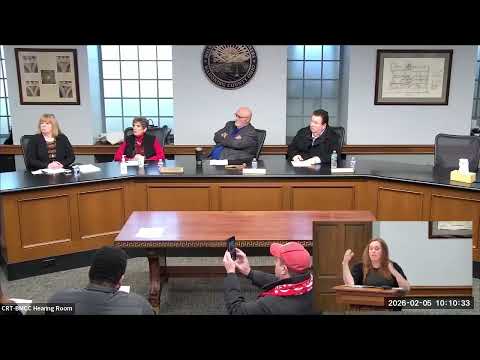
State Representative Laura McNally (58th District) told Mahoning County commissioners on Feb. 5 that multiple bills passed at the end of the legislative session will alter local property-tax mechanics and could cost schools and counties tens of millions of dollars over the next several years.
McNally said HB 124 "changes the way that the county auditors can...take their...sample assessments" and gives the Ohio Department of Taxation authority to find an auditor's sample size "was not of quality and make them do it again and throw it out," an oversight she said is intended to strengthen the assessment process rather than generate direct refunds for taxpayers.
She also described HB 129 as modifying the calculation for the 20-mil floor used by school districts and joint vocational districts, allowing certain emergency or substitute levies approved before 2026 to be converted to a fixed-sum levy. "It is going to...allow school districts to levy property taxes that'll generate a fixed sum of money" under limited circumstances, she said, and warned this will slow annual property-tax revenue growth for districts on the 20-mil floor.
On HB 186, McNally said the bill would authorize a property-tax credit for owners of property located in districts on the 20-mil floor, limiting a district's total property-tax revenue growth to the rate of inflation. She noted the credit applies broadly to all eligible property in the state, not only homeowner-occupied housing, and walked through a hypothetical: if a district collected $30,000,000 on the 20-mil floor and inflation limited it to $25,000,000, "they're gonna lose that 15%." McNally provided estimated state-level reductions in education-related tax revenue of about $18 million in 2026, $25 million in 2027 and $25 million in 2028.
McNally and others referenced a separate bill she identified as HB 335, framing it as delivering only small per-household savings while producing larger fiscal impacts to local governments. "You're gonna get $2 in savings," she said of that proposal, adding the legislation could still mean large aggregate losses for counties and schools.
Commissioners pressed the state representative on why these changes were not made earlier, during the housing boom, and whether the state would offset the projected local losses. Commissioners repeatedly noted that many county services — public health, children’s services, street and waste departments — are funded in part by property tax revenue and that the state historically provides a limited share of school funding. A commissioner said, "The state isn't putting any...skin in the game," and urged state leadership to take responsibility rather than shifting costs to counties.
McNally said some bills had limited movement in prior sessions and that those under discussion were the only measures that had advanced recently; she offered to supply commissioners with district-level estimates for expected revenue losses. No formal action by the board was taken on the state legislation during the meeting.
Next steps: McNally encouraged continued local engagement with legislators and said timing was critical if county and school revenues are to be protected. The commissioners signaled they would continue to press the state for assistance and review any district-specific estimates McNally provides.