
Chattanooga official outlines Sunbelt Atlantic Connector to Red Bank commission
Get AI-powered insights, summaries, and transcripts
Subscribe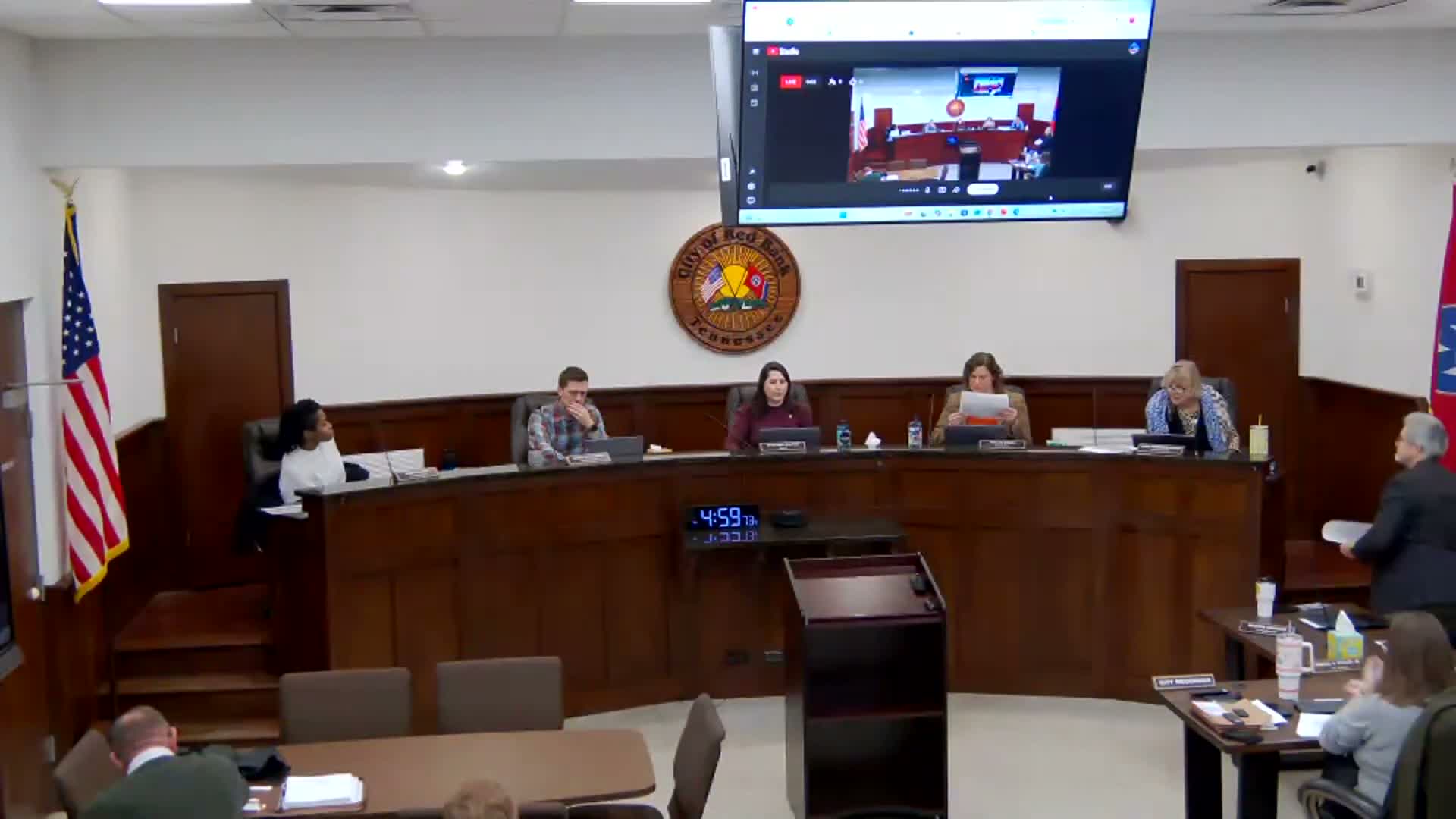
Summary
Ellis Smith of Chattanooga presented a regional passenger‑rail plan called the Sunbelt Atlantic Connector to the Red Bank commission, describing staged planning steps, infrastructure needs (double track, sidings, grade separations), and potential economic benefits while noting Red Bank would have no formal role but could gain local access.
Ellis Smith, director of intergovernmental and external affairs in Chattanooga Mayor Tim Kelly’s office, told the Red Bank commission at a work session that Chattanooga and three other cities are advancing a regional passenger‑rail proposal they are calling the Sunbelt Atlantic Connector. "We're calling it the Sunbelt Atlantic Connector," Smith said, describing a plan to use existing CSX freight tracks to reconnect Chattanooga with Atlanta, Nashville and Memphis.
Smith said the project is not high‑speed rail and emphasized a staged approach: a completed business plan, a service‑development plan to feed railroad owners, and later engineering that will identify bottlenecks and where double track, sidings or other work are needed. "Step 1 is really developing the business plan for this project," he said, adding that later phases will require targeted engineering to allow passenger trains to pass freight traffic reliably.
The presentation stressed economic and quality‑of‑life rationales. Smith cited recent intergovernmental estimates of statewide impacts—transcript references included figures of roughly $18.2 billion and $20 billion in economic impact in comparable projects—and argued that restored passenger service can boost tourism, spur transit‑oriented development and reduce wear on roads. He said major capital elements such as grade separations can be "tens of millions of dollars" and typically require state matching funds in many grant programs.
On operations, Smith said passenger service could be run by Amtrak, Brightline or other operators under state oversight, and that cooperation with freight railroads like CSX and Norfolk Southern will require negotiated agreements. He described a near‑term planning cost the presentation characterized as about $2.5 million for the next step, with roughly a 10% non‑federal match expected, and said the group is forming a 501(c)(3) to coordinate the four cities and two states involved.
Smith invited Red Bank to follow the effort and said the presenters would provide materials and updates. He did not request formal action from the commission; he characterized Red Bank's role as informational because "there will not be any formal role for the city of Red Bank in this effort," while noting that Red Bank residents could stand to benefit from improved regional connectivity.
The immediate next steps named in the presentation are completion of the service‑development plan, further economic analysis and continued outreach to railroad owners and regional partners. The presenters said they will share updates as the planning process advances.