Get Full Government Meeting Transcripts, Videos, & Alerts Forever!
Get email alerts on the Parks And Recreation topic
No spam. Unsubscribe anytime.
Louisa County approves $2.2 million supplement for two turf fields after months of debate
Summary
After a lengthy public hearing with dozens of speakers, the Louisa County Board of Supervisors approved a supplemental appropriation (4–3) to fund two synthetic turf fields at the middle school site, drawing on school, parks and county capital reserves.
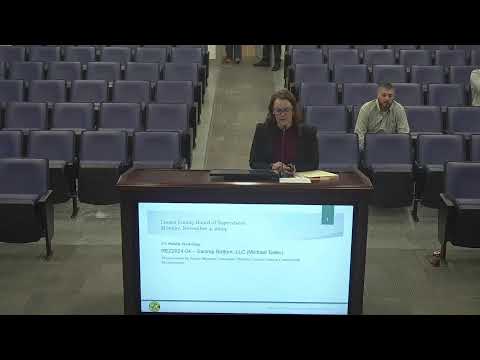
The Louisa County Board of Supervisors voted 4–3 on Nov. 4 to approve additional funding for two synthetic turf fields at the county middle school complex, after a public hearing that drew strong testimony from parents, coaches and Parks & Recreation representatives.
The supplemental appropriation, approved after extended debate over cost and priorities, funds core field construction, lights, scoreboards, shock pads and site conduit but does not include permanent restrooms or a concession building. County staff told the board the $2,770,000 supplemental request covers the AstroTurf, Musco lighting, NEVCO scoreboards, conduit and Dominion Energy service; staff estimated turf life at 10–15 years.
Proponents — youth‑sports leaders and parents — said a turf complex would improve safety and program continuity, reduce maintenance, and attract tournaments that could bring indirect spending to the county. “We bring in hundreds of families from surrounding communities,” Jonathan Christian, a LAHSA board member and travel coach, said during the hearing, adding that tournaments could generate significant local spending and that current fields are “antiquated.” Other speakers, including Ryan Underwood (LASA treasurer) and George Soriano (LAHSA president), described travel burdens, lack of lights and safety hazards on existing fields.
Opponents warned the project was a lower priority than core county services and raised concerns about tapping existing capital lines earmarked for other projects. Amy Ware, chair of the Parks and Recreation Advisory Commission, told the board her commission was surprised to learn the cost overrun had grown to nearly $2.8 million and expressed concern that funding would come from lines intended for a future indoor pool, skate park, and maintenance of existing facilities.
Board members split along those lines. Supervisor Williams moved the appropriation, proposing a funding mix that included $1,277,438 from the county’s long‑term capital reserves, $500,000 from school long‑term capital reserves and $1,000,000 from the Parks and Recreation capital reserves, with the finance committee to review related transfers. At roll call the motion passed with four votes in favor and three opposed (Woodward No; McCotter No; Jones Yes; Williams Yes; Adams Yes; Barnes Yes; Barlow No).
Staff said the project had been affected by Department of Environmental Quality requirements that increased earthwork and retaining‑wall costs; they also noted some construction contracts had already been executed for grading and that conduit installation for lights would be coordinated with clearing work.
The board attached no formal changes to the project’s scope at the time of the vote but directed staff to work on intergovernmental agreements: one supervisor asked for a memorandum of understanding with the schools because the project is sited on school property. The resolution funds the core fields and associated capital infrastructure; items such as permanent restrooms and concessions remain to be addressed later.
The funding decision follows months of meetings and a county Parks & Recreation survey that staff said drew about 1,000 resident responses. Supporters argued turf fields address safety, availability and economic development; dissenting supervisors said the county should prioritize core services and be cautious about reallocating capital meant for other projects. The appropriation is effective immediately.