Get Full Government Meeting Transcripts, Videos, & Alerts Forever!
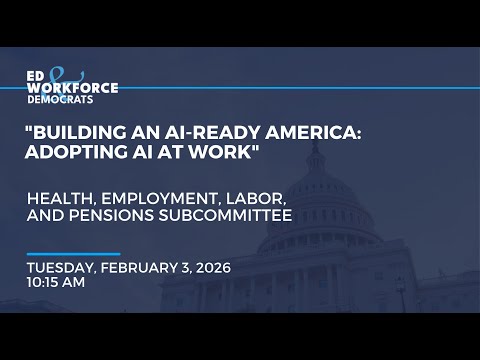
House subcommittee hears calls for stronger AI guardrails to protect workers
Summary
Witnesses and Democratic members urged transparency, human review, and worker and union involvement in workplace AI, citing surveillance, wage-setting algorithms and the need to update enforcement capacity at agencies such as the EEOC and Wage and Hour Division.
The House subcommittee examined how artificial intelligence is being used in workplaces and whether federal policy should step in to protect workers.
Tanya Goleman, a fellow at Workshop, told the panel that ‘‘workers are already experiencing harms’’ from algorithmic management, including use of AI to set pay and monitor employees. She cited surveys and sector-specific examples — from call centers to health care — to argue for disclosures when AI affects employment, human review of significant employment decisions, and…
Already have an account? Log in
Subscribe to keep reading
Unlock the rest of this article — and every article on Citizen Portal.
- Unlimited articles
- AI-powered breakdowns of topics, speakers, decisions, and budgets
- Instant alerts when your location has a new meeting
- Follow topics and more locations
- 1,000 AI Insights / month, plus AI Chat