Residents demand accountability after Robin Lane sewage rupture; question county’s reported spill volume
Loading...
Summary
Residents at a Lake County public-comment session said the volume of the Robin Lane sewage rupture has been vastly underreported, pressed officials for pumper-truck invoices and pump logs, and asked the board to place follow-up items on a future agenda.
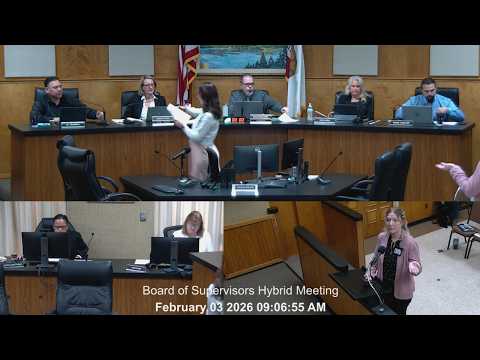
Residents who spoke during public comment at a Lake County Board of Supervisors meeting pressed county officials to release pump logs and invoices and to reconcile widely differing spill-volume figures after a rupture on Robin Lane.
Sterling, a member of the public, said Lake County Special Districts “publicly acknowledge that approximately 2,900,000 gallons of untreated sewage was released roughly around 37 to 38 hours,” and contrasted that with what he called a county claim that “only 3,900 gallons were reported to the state.” He said the smaller number is “physically and mathematically impossible,” citing observed ponding, videos of active discharge days later and the deployment of roughly 30 pumper trucks. Sterling asked the board to put a motion on a future agenda to require special districts to produce pump logs so the public can see whether lift stations were turned off during the incident.
Tom Lasik, another public commenter, said the Robin Lane incident appears to reflect a pattern of dismissing serious health and safety concerns and cited other local water-system failures, adding that some pipes are asbestos-lined and need flushing and testing before being returned to service. Cassandra Hulbert, who identified herself as a Robin Lane resident, said she was directly impacted and repeated calls for transparency: “We were told in the first city hall meeting days after the incident … that they would have invoices from the pumper trucks informing the public,” she said, but those invoices “still have not been publicly released.”
Speakers emphasized two related points: the gap between reported recovery amounts and estimated spilled volume, and the absence of public documentation (pumper invoices and pump logs) the community was told would be provided. Commenters framed the issue as not merely paperwork but as a public-health and regulatory concern because, they said, seepage into soil and groundwater is reportable under California law.
The board closed the public-comment period after hearing these remarks; no response or formal action was taken on the record during public comment. Speakers requested that the board place requests for pump logs and related documentation on a future agenda so the public can verify timeline and volumes.