Spokane District Court outlines mental-health court as treatment-focused alternative; referral line provided
Loading...
Summary
Jeff Smith, who presides over therapeutic courts in Spokane District Court, described the court's mental health program, its five-phase structure, typical 14–24 month timeline, available support services and a referral phone line. He said grant funding covers testing and monitoring and sometimes treatment.
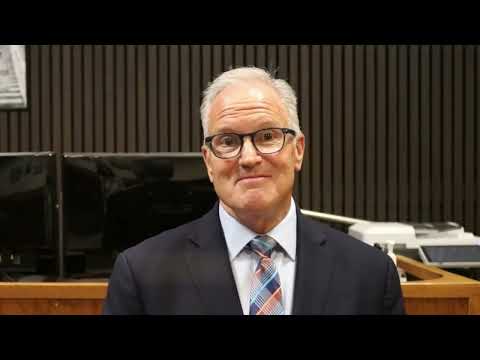
Jeff Smith, who presides over therapeutic courts in Spokane District Court, offered a concise overview of the court’s mental health (therapeutic) program and how to begin the referral process.
The program is designed as a treatment-focused alternative to traditional criminal prosecution, Smith said, emphasizing mental health and substance use disorder treatment rather than only the offense. He said the court works with a team that helps participants access housing, employment, health care, transportation and other needs identified by participants or staff.
Smith said grant funding currently covers the cost of testing and monitoring and may, in some cases, cover treatment and limited financial assistance for basic needs on a case-by-case basis. ‘‘We focus on the root of the issue versus only the crime committed and work closely with you to address those issues through mental health and substance use disorder treatment,’’ he said.
Participants receive a program participant manual upon acceptance. Smith said most participants can finish the program within 24 months, and compliant participants may finish in as few as 14 months. The program is organized into five phases; participants complete projects to advance through the phases, which Smith described as structured to support long-term recovery.
Smith noted the court’s track record, saying ‘‘over the years, we have had hundreds of participants successfully complete this court and go on to lead happy and productive lives.’’ He also read a recent graduate’s statement describing how the court’s encouragement helped that person continue recovery: ‘‘I did not let my setbacks define who I was. I no longer am giving into the fear or pain… Hearing the court's encouragement, even when I was struggling, gave me the motivation and desire to keep going.’’
For referral inquiries, Smith provided the therapeutic court office phone number: (509) 477-2230. He said the office will walk interested people through the referral steps.
The presentation was informational; no formal actions, votes or policy changes were recorded in the transcript. The program’s funding is described as grant-based; Smith did not specify the grant source or total amounts.