Get Full Government Meeting Transcripts, Videos, & Alerts Forever!
Get email alerts on the International Relations topic
No spam. Unsubscribe anytime.
Djibouti urges renewed multilateral action on conflicts, climate finance and regional security at UN General Assembly
Summary
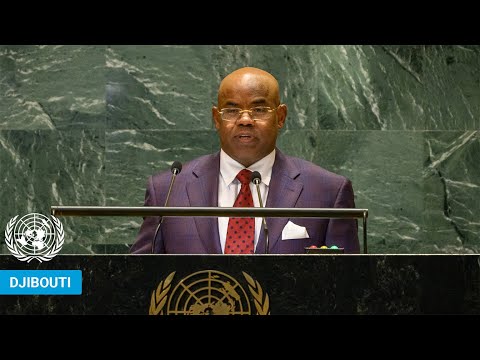
Mohammed Siad Dwale, head of Djibouti’s delegation, told the General Assembly that member states must strengthen ECOSOC, deliver on the $100 billion annual climate finance pledge, operationalize the loss-and-damage fund, and support stability efforts in Somalia and Sudan.
Mohammed Siad Dwale, head of Djibouti's delegation to the United Nations General Assembly, told the assembly that the world faces a “perilous period” of proliferating conflicts, threatened multilateralism and widening financing gaps for the Sustainable Development Goals.
Dwale opened by congratulating the assembly president and endorsing the session theme—"acting together for the advancement of peace, sustainable development, and human dignity." He said the United Nations must seize a “window of opportunity” to renew cooperation and reform institutions to better serve developing countries.
He urged international financial institutions to expand subsidies and provide developing countries greater access to financing on favorable terms, including through ‘‘innovative risk instruments,’’ and called for a stronger role for the UN Economic and Social Council (ECOSOC) in global economic coordination.
On climate, Dwale said COP29 must elevate adaptation and move quickly to operationalize the loss-and-damage fund. "The promise of paying out $100,000,000,000 per year has not been kept," he said, and urged the swift disbursement of funds needed for adaptation and an equitable transition to renewables in low-income countries.
Dwale also addressed regional security. He welcomed Somalia’s progress and urged agreement on financing and adequate resources for the future African Union mission in Somalia, stressing the need for force multipliers. He condemned Houthi attacks on merchant shipping, saying they have driven up maritime transport costs and risk devastating local economies and the environment, and called for stepped-up diplomacy under UN auspices to ease tensions in the Red Sea.
On the Middle East, Dwale expressed deep alarm about the situation in Gaza and the West Bank, citing civilian casualties and severe restrictions on access. He welcomed the General Assembly's recent emergency special session resolution and expressed support for a 21‑day ceasefire proposed by the United States and France.
Turning to Sudan, he described a tragic humanitarian catastrophe and said Djibouti, in partnership with the United Nations, has hosted mediators’ retreats to harmonize initiatives aimed at ending the conflict. He urged Sudanese parties to honor previously negotiated commitments and called for full, safe and rapid humanitarian access.
Dwale noted Djibouti’s recent election to ECOSOC for 2025–2027 and pledged his country would champion priority areas. He closed by urging member states to honor the commitments of the "pact of the future" and warned that failing to implement those commitments risks reducing the United Nations to a forum of nonbinding statements.
The presiding officer thanked the head of the Djibouti delegation and concluded the exchange.