Hickory council asks state to move municipal elections to even years, 6–1
Loading...
Summary
Hickory City Council voted 6–1 to adopt a resolution asking the North Carolina General Assembly to amend the city charter to move municipal elections to even-numbered years, a step proponents say will raise turnout and reduce local election costs. Opponents argued the change risks partisan coattails and reduced focus on local races.
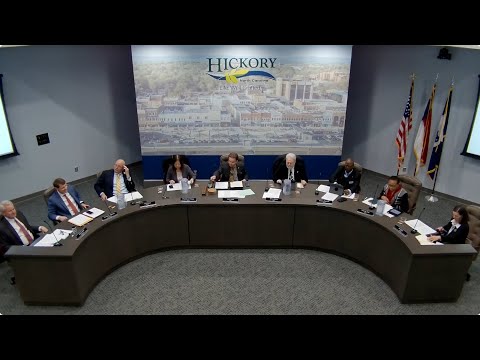
Hickory City Council voted 6–1 on Feb. 3 to adopt a resolution asking the North Carolina General Assembly to amend the city charter so Hickory’s municipal elections occur in even-numbered years.
City Manager Warren Wood told the council that the proposal responds to three trends: low turnout in recent odd-year municipal elections, concerns about partisanship being injected into local races, and the fixed cost of running elections. Wood summarized recent local figures, saying the city has about 30,000 eligible voters and that 4,800 ballots were cast in the most recent municipal election (about 16 percent turnout), while general election turnout in 2024 reached roughly 74 percent. He also noted that running polling sites accounted for roughly $60,000 of the city’s 2025 election costs and that municipalities that moved to even-year cycles reported large turnout increases.
The council’s debate reflected sharply different views on whether shifting the calendar addresses turnout or simply imports state and national partisan dynamics into local contests. A resident speaker, Park Englefield, urged the council not to ‘‘hitch ourselves to elections that are increasingly divided,’’ saying local races would be overshadowed by higher-profile state and federal contests. Melissa Napier, another resident, asked the council to pause and try expanded voter outreach before amending the charter.
Supporters countered that consolidating municipal elections with state and federal cycles reduces redundant polling costs and lowers obstacles for voters who must otherwise take time off work to vote in separate years. One council member (unnamed in the transcript) cited North Carolina statutory authority in the discussion, referencing ‘‘North Carolina General Statute 160A-148.’’
Mayor Hank Guest made the motion to adopt the resolution as presented to the city’s legislative delegation; the motion was seconded and passed 6–1. Councilmembers did not record individual roll-call names in the audio record provided.
What happens next: if the council’s legislative delegation files a local bill and the General Assembly passes it, the legislature would amend the city charter to implement the change; council members noted a filing window that opens April 21 for local bills and said implementation would require term adjustments determined by the legislature.
The council’s packet included the formal resolution language and supporting turnout and cost data; the council heard more than a dozen public comments on the subject before voting. The council also approved routine minutes and the consent agenda earlier in the meeting.