Senate debate centers on who may sue under Maryland Voting Rights Act bill
Loading...
Summary
Senators debated Senate Bill 255, the state Voting Rights Act of 2026, focusing on who has standing to sue and what constitutes 'vote dilution.' The chamber adopted a committee amendment and ordered the amended bill to third reading; sponsors said courts would decide remedies.
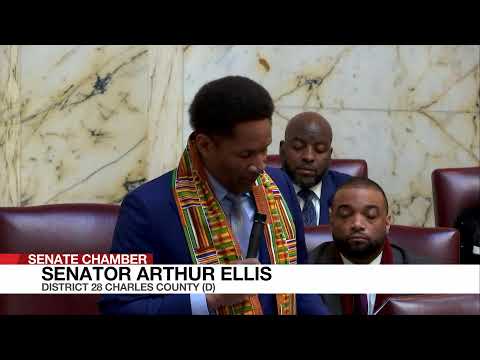
Senate Bill 255, the Maryland Voting Rights Act of 2026, advanced on the Senate floor Feb. 5 after senators debated who may bring enforcement actions and how the law would define "vote dilution." The chamber adopted a committee amendment without objection and ordered the amended bill printed for third reading.
Supporters said SB 255 establishes a state framework for the federal Voting Rights Act and does not change federal law. During floor discussion, a senator asking for clarification said, "This bill will not affect that method of election in any way," referring to county methods where commissioners must live in a district but are elected at large. The bill explainer confirmed: "That's correct. This bill does not affect that whatsoever." The exchange is part of a longer series of questions about scope and timing.
A central topic was who may bring a challenge under the bill. A senator asked whether "the office of the attorney general or any other person" could initiate suits and whether that required a person directly affected. The explainer answered: "So anyone within that county that believes that their vote was diluted can actually bring case to, the attorney general, as well as all any other organizations outside can also bring, that same, suit to the actual attorney general." The sponsor emphasized the legislation provides standing to bring claims but leaves remedies to the courts: "This bill... provides standing, not an outcome. It only provides the standing, not outcome. So it's totally up to a court what that outcome will be."
Senators pressed the sponsor for a clear definition of "vote dilution." The explainer responded that dilution arises when a protected class is impaired from electing a candidate of its choice — for example when race, color or language-based factors effectively reduce the political power of a group — and that courts would evaluate whether a voting system "impairs a particular class" from electing the candidate of their choice. On whether political party is a protected class, the explainer said it is not.
Floor leaders agreed to carry further debate to subsequent readings; the amended report was adopted and SB 255 was printed for third reading. No final statewide vote on SB 255 occurred on Feb. 5; senators said more conversation will take place on third reading and beyond.
What happens next: SB 255 will appear on a future calendar for third reading, where the full Senate will vote on final passage or further amendments.