Get Full Government Meeting Transcripts, Videos, & Alerts Forever!
Get email alerts on the Airport Airspace topic
No spam. Unsubscribe anytime.
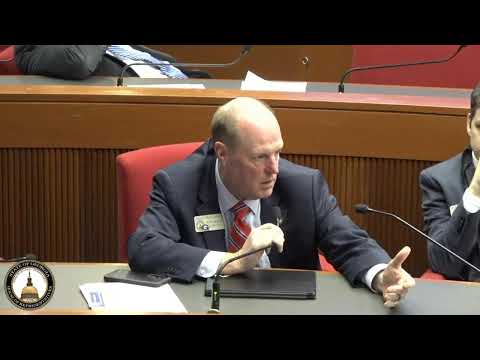
House committee debates airport‑airspace bill as local control, compensation and enforcement issues flare
Summary
Lawmakers, airport managers and association attorneys debated a proposed bill to create airport‑affected areas tied to FAA Part 77 protections. Witnesses urged clearer enforcement, compensation and timelines; the committee voted to form a five‑person working group to revise the draft.
The House Transportation Committee spent more than an hour scrutinizing a draft bill aimed at protecting airport approaches and associated airspace by giving local governments and airport authorities tools to prevent incompatible development.
Edward Lindsey of Dentons, representing the Georgia Airport Association, told members the bill’s purpose is preventive: to encourage local governments to adopt zoning and permitting that align with FAA Part 77 protections so airports are not later constrained or lose federal support. Witnesses emphasized the bill does not impose new FAA requirements but seeks state and local coordination to avoid post‑hoc FAA penalties.
Airport managers from Perry, Gwinnett and Peachtree City described real examples where neighboring jurisdictions rezoned or approved structures without airport consultation, producing obstructions that forced FAA reviews and, in some cases, would have required changes to instrument approaches or runway thresholds. Matt Smith, Gwinnett County airport director, said a building rezoned near his runway was raised 20 feet without consultation and that local governments sometimes benefit economically from an airport while opposing restrictions.
Members raised several legal and policy concerns: whether an appointed airport board or authority can legally assume zoning‑type powers, how to compensate landowners if a property’s use is restricted (navigation easements and FAA compensation were cited), the need for grandfathering existing uses, and a clear timeline for when state intervention would replace local inaction. Several members urged that the bill include more explicit remedies than simply withholding aviation funding.
Committee members and witnesses suggested alternatives taken from other states (Florida’s 10‑mile permit radius was cited) and recommended clearer caps on the geographic scope of any state authority. Questions also focused on who would appoint members to any joint board, how voting would be weighted across multiple jurisdictions and whether appointed boards could override elected local officials.
After debate the committee approved a motion to convene a five‑person working group (two legislators and three association representatives) to refine the draft bill and return suggested language in two weeks.
The hearing was informational; the bill was not filed during the session.
The committee’s next steps: staff will convene the working group to draft revised language addressing enforcement mechanisms, timelines, compensation measures and governance structure.