Beatrice hears aquatics study that outlines $1.5M repairs to $11M replacement with ‘lazy river’ most popular
Summary
Consultant Waters Edge presented a three-tier study for the aging Beatrice pool, with Tier 1 repairs estimated at $1.5–$2 million, Tier 2 upgrades at $6–$8 million, and a full replacement (including a lazy river) at $9–$11 million; council discussed funding options and next steps.
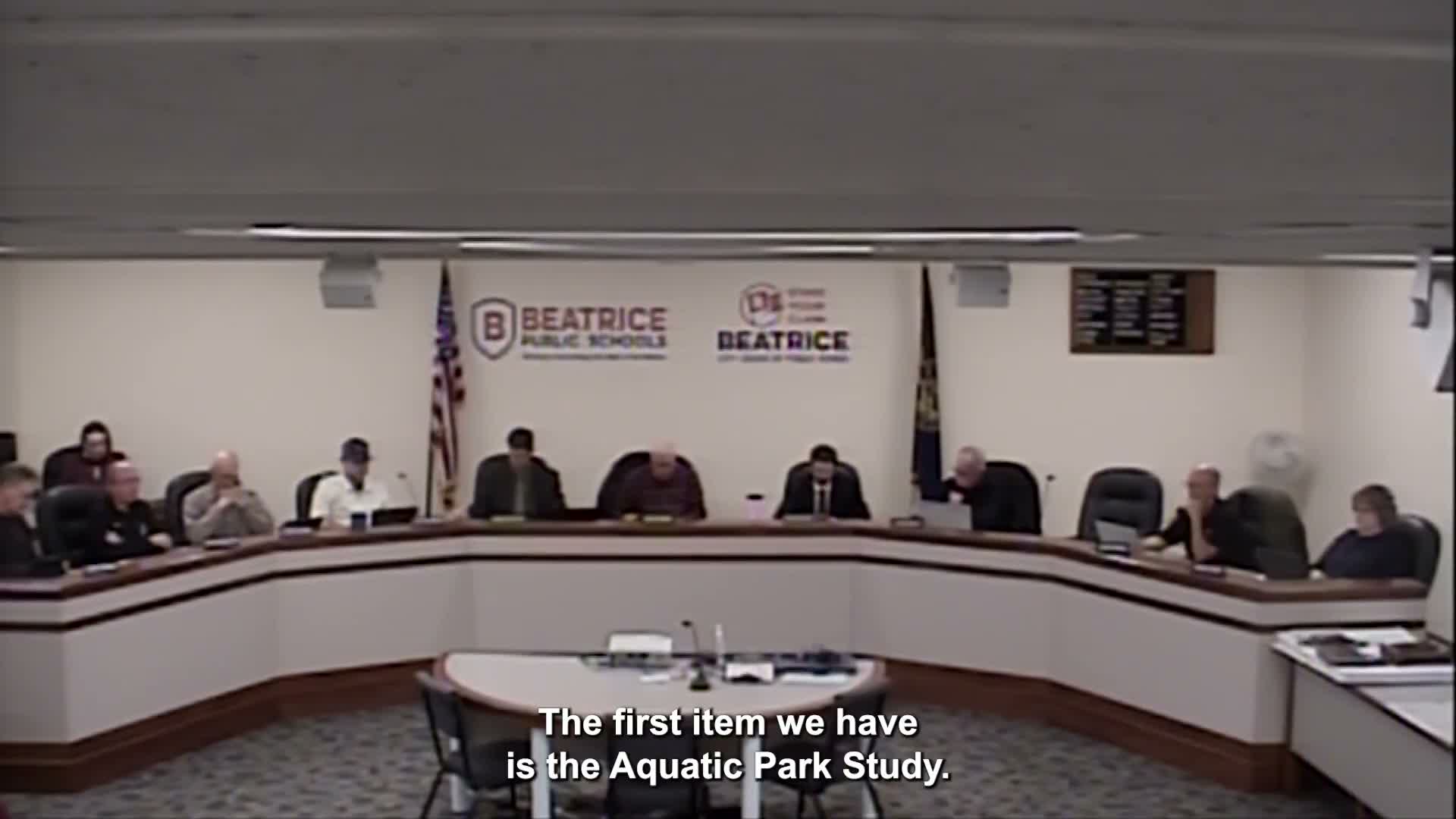
Beatrice City Council on Monday received an aquatics study that lays out staged options for repairing or replacing the city pool, with cost estimates ranging from about $1.5 million for immediate repairs to as much as $11 million for a full replacement with a lazy river.
"I'm with Waters Edge Aquatic Design," said Kyle McCauley, the consultant who presented the report. He summarized a conditions assessment, public engagement and three principal scenarios: Tier 1 (repairs), Tier 2 (repairs plus upgrades), and Tier 3 (replacement with additional amenities). "Our engineers estimate for that work was 1 and a half million to 2,000,000" for the Tier 1 repairs, McCauley said. He gave a Tier 2 estimate of about $6 million to $8 million and said a full replacement concept could run $9 million to $11 million.
The study documented age‑related deterioration: movement and efflorescence in the concrete basin, corrosion on slide steel, localized settling around the wading pool, and mechanical equipment — including filters — nearing the end of their expected service life. McCauley said staff maintenance has limited deferred maintenance, but several components will soon need attention.
Public engagement included an online survey and two open-house meetings; survey respondents prioritized fun features and amenities, with the lazy river and larger water slides among the most requested elements. McCauley said many residents also emphasized programs such as swim lessons, party rentals and water aerobics.
Council members pressed for details about sequencing and operations. McCauley said it is possible to keep the existing pool open during staged construction, but doing so requires careful sequencing around existing mechanical systems and safety protocols. He cited a Grand Island project as an example where work extended across multiple seasons and required phasing.
City staff cautioned that funding remains the primary constraint. "Most notably, the one that everybody thinks of is the sales tax issue," Tobias Templemeyer said, explaining that a sales-tax option would require voter approval and that the city needs certain fire-station bonds to be paid off before dedicating that revenue source. Templemeyer said the city is also exploring grants and local fundraising and urged the council to develop a master concept plan to support grant applications.
Several council members said the project could become a regional draw if the city invests in higher-end amenities, while others warned not to build features the city could not staff or operate safely. One council member summarized the committee’s stance: the committee favored the full replacement in concept but recognized the need to prioritize affordable, fundable steps first.
Next steps discussed included refining a master concept plan, updating cost estimates as market conditions change, and continuing grant searches. McCauley said the firm can update the analysis as the council refines priorities and that final design and permitting could be timed so construction begins after a swim season if the council chooses to move quickly.
No formal action was taken at the meeting; the council directed staff and the committee to continue planning and to provide materials that would support grant applications and funding discussions.