Get Full Government Meeting Transcripts, Videos, & Alerts Forever!
Get email alerts on the Traffic Operations Study topic
No spam. Unsubscribe anytime.
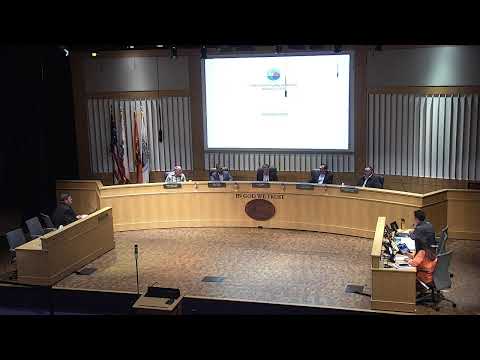
Lake Forest commission reviews traffic‑operations study, asks staff for a prioritized, cost‑benefit list
Summary
The Lake Forest Traffic and Parking Commission reviewed a draft Traffic Operational Improvement Study covering signal timing, roundabouts, buffered bike lanes and spot safety fixes across key corridors. Commissioners asked staff to return with a prioritized table showing cost, traffic volumes and recommended next steps.
Lake Forest City — The Traffic and Parking Commission on Monday reviewed a draft Traffic Operational Improvement Study that recommends operational and physical changes across corridors including Big Parkway, El Toro Road and Lake Forest Drive.
Staff presenter Tran said the study found most intersections "are operating at a very acceptable level in the city here," but identified targeted improvements such as signal‑visibility upgrades, video or advanced detection, buffered bike lanes, speed‑feedback signs and select raised medians. Tran noted the study aligns with council strategic objectives and that budget constraints meant staff focused on corridors likely to yield wide benefit.
The commission discussed several site‑specific options. At Bay Parkway and Rue des Valor staff presented both an enhanced stop‑sign treatment and a potential roundabout, noting a roundabout would cost an estimated $3.35 million compared with about $1 million for a typical traffic signal. Tran said the roundabout would require more right‑of‑way and could change pedestrian crossing behavior, and that engineering warrants did not compel an immediate major intervention.
For Lake Forest Drive at Geronimo, staff recommended extending the left‑turn pocket by roughly 150 feet to ease school‑hour queuing, at an estimated cost of about $300,000. At Lake Forest/Trabuco staff presented three options for a de‑facto right‑turn pocket: a low‑cost restripe (~$30,000), a mid‑range widening (~$446,000 per the report), and a full‑build solution (~$1.2 million); staff warned restriping could extend queuing and require curb or sidewalk work for the full solution.
On El Toro Road staff recommended corridor‑wide raised medians, buffering for bike lanes and selective retroreflective signal backplates (about $5,000 per intersection for retroreflective backing) to improve visibility and slow speeds. Staff also flagged several intersections where a raised median (estimated $120,000) could improve safety without adding a signal.
Commissioners asked staff to prioritize projects by expected benefit relative to cost and traffic volume. Commissioner Patel and others urged focusing first on intersections showing lower levels of service or higher volumes; Chair Reichert and Commissioner Armando suggested low‑cost, high‑benefit items be identified for near‑term action. Commissioner comments repeatedly emphasized the need for a concise summary table that lists each project, estimated cost, affected traffic volumes or level of service, and staff recommended priority.
Tran told the commission staff is in talks with Econolite and others about adaptive timing platforms (Centriq/eAdaptive) but said he "is not confident enough to deploy it in our city" at scale without a pilot and human review, citing liability and the need for demonstrable cost‑benefit. He recommended a limited demo on one corridor before any broader adoption.
The commission requested staff return at the next or following meeting with a prioritization or sensitivity analysis that ranks projects by cost, volume/impact and feasibility. The study remains a draft; staff will incorporate commissioner feedback and present a consolidated recommendation for a council referral or approval at a future meeting.
The commission did not adopt any of the study’s capital projects at the meeting; the next step is a staff follow‑up report with prioritized recommendations.