
Knoxville unveils Gateway Park entrance after decades of community effort
Get AI-powered insights, summaries, and transcripts
Subscribe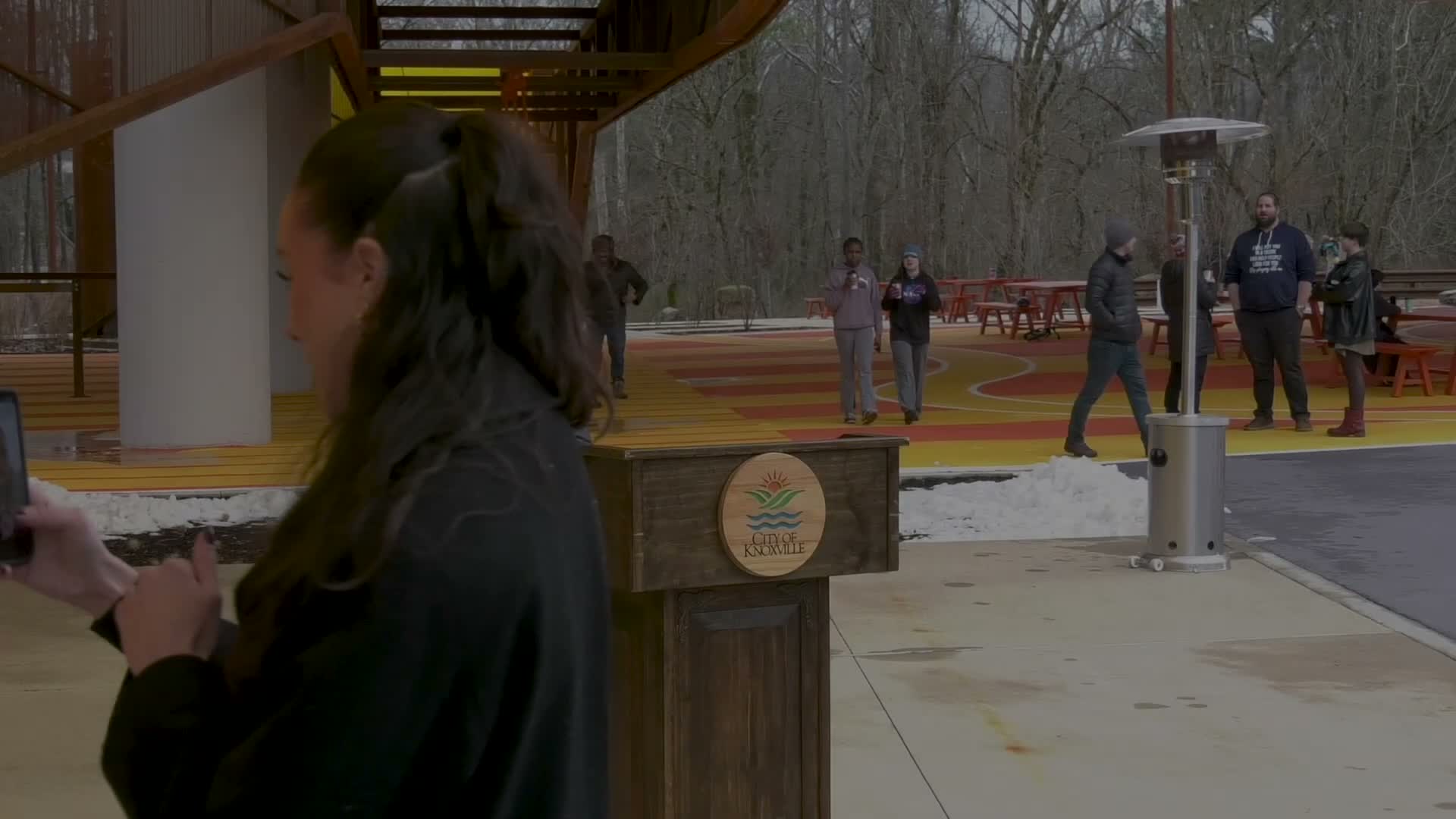
Summary
City officials and community leaders gathered in South Knoxville to dedicate the new Gateway Park entrance, marking what organizers called an $11 million investment in accessible amenities and expanded connections to the Urban Wilderness network.
Knoxville officials and community volunteers gathered at the Gateway Park entrance in South Knoxville on Saturday to mark the completion of a long-planned park gateway and new amenities that organizers said will improve access to the city's Urban Wilderness.
“this incredible outcome is what that energy, what that vision, what that collaboration... has brought about—a place in the outdoors for all of us to enjoy,” Councilwoman Karen Adams said as she opened the dedication. Adams identified herself as the council representative for the city’s 1st District and framed the ceremony as the product of years of grassroots advocacy.
Wes Howard, introduced at the event as Knoxville’s urban wilderness coordinator, told the crowd the Urban Wilderness "is an iconic part of the fabric of Knoxville" and thanked design and construction partners, including Port Urbanism, Robin Easter Design, JMT and DCSI, for work on the site.
An unnamed city official at the ceremony said the project “represents a total investment of $11 million,” and described the new amenities as accessible features that include restrooms, water, parking, lighting and covered areas intended to allow use in a range of weather and mobility conditions. The official said the improvements complete the initial vision for the Gateway Park and are intended to draw both residents and visitors.
Former mayor Madeline Rogero, invited to unveil a dedication plaque, recounted the multi-decade history behind the site. She described earlier proposals to extend James White Parkway, citizen protests including tree-sits, and strategic land acquisitions such as McMurray Myers Park that helped preserve the area for public use. Rogero credited bipartisan political action and public engagement for shifting the site from a proposed highway stub to parkland; she also said Gov. Bill Haslam later deeded the state property at the end of the roadway to the city, enabling the grand entrance to be built.
Organizers credited a broad coalition—municipal staff, nonprofit partners such as Legacy Parks Foundation, trail volunteers and private funders—for sustaining the project through multiple administrations. Event remarks emphasized the project's role within larger South Waterfront investments and plans to connect more than 1,000 acres across nearby preserves, quarries and city parks, including Baker Creek Preserve and the Iams Nature Center.
After brief remarks and the unveiling, organizers closed the program and invited children and families to use the new playground and park facilities. No formal votes or council actions were taken at the event.