Industry-backed bill would create statewide tourism assessment with ratepayer oversight
Loading...
Summary
Substitute House Bill 23-25 would create a Tourism Assessment Program administered by the Washington Tourism Marketing Authority, levy an annual assessment on several tourism business categories, and establish a 10-member ratepayer oversight board. Supporters said it’s a voluntary, industry-led funding model to generate a sustainable statewide marketing fund.
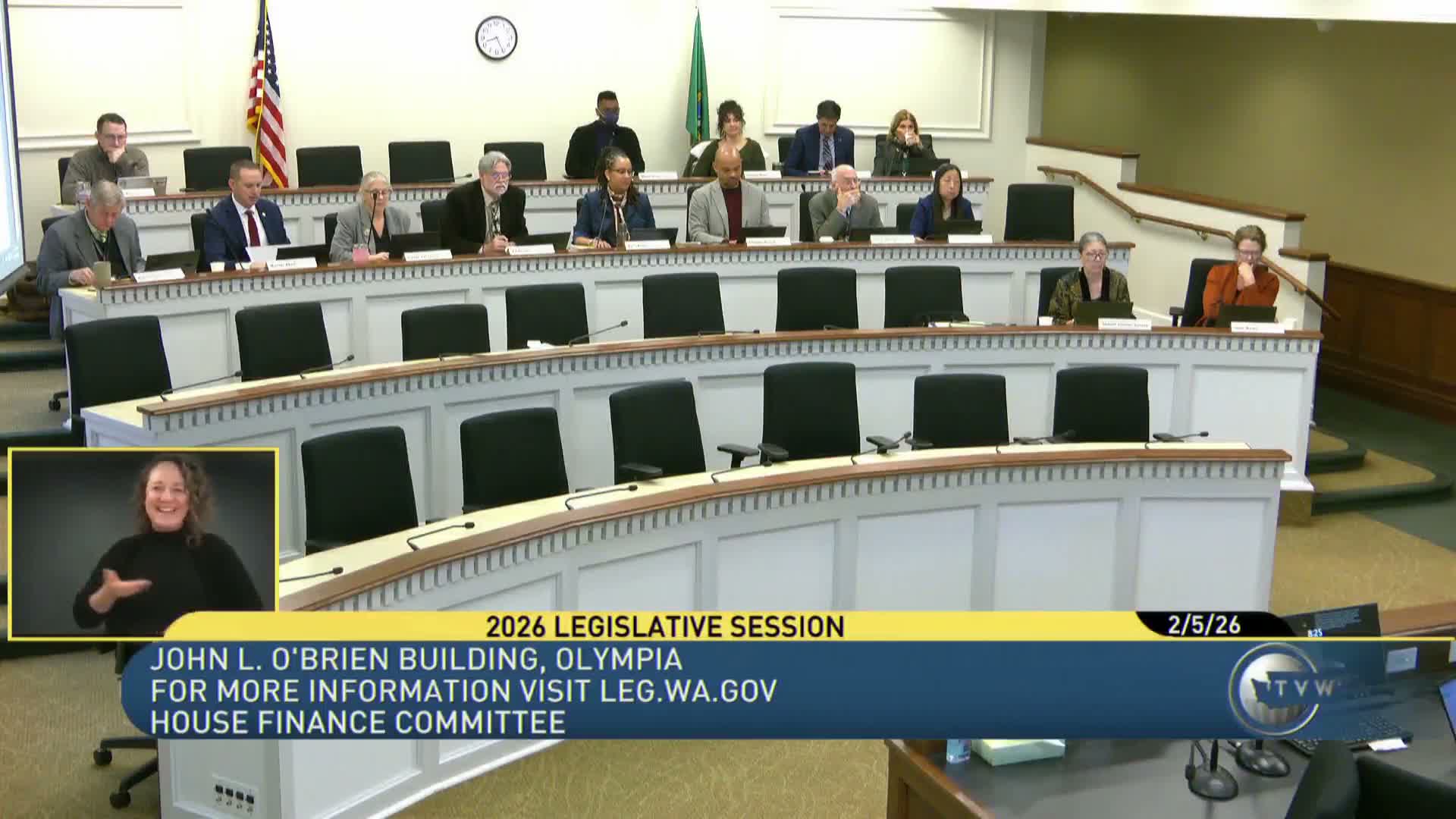
The House Finance Committee heard substitute House Bill 23-25, a proposal to create a statewide Tourism Assessment Program (TAP) administered by the Washington Tourism Marketing Authority (WTMA). The measure would levy an industry assessment on specified tourism businesses and require approval through a weighted industry referendum before any collections begin.
Martha Whaling (staff) outlined the bill’s structure: a 10-member ratepayer oversight board made up of employees or officers of assessed businesses would design the program, set rates and sectors, oversee the budget and report annually. Whaling also said the bill would create a narrow public records exemption for financial and commercial information submitted by businesses to the authority and the board.
Representative Dave Paul (10th Legislative District), the prime sponsor, described the bill as a voluntary, industry-led mechanism modeled on successful self-assessment programs. "This is a voluntary program," he said, adding it should help Washington better compete for visitors with larger, better-funded peer states.
Industry groups from across the state—wine, hospitality, breweries and destination marketing organizations—testified in support, presenting projections for eventual program scale and expected return on investment. State tourism staff and proponents said a $25 million annual program could yield substantial increases in visitor spending and state and local tax revenues over time, and that program details would be set by participating industries in rulemaking and the ROB process.
Supporters and some committee members discussed the need to ensure geographic and community representation (including tribal participation) and to structure grants so that investments reach smaller and historically underinvested neighborhoods. No final vote was taken during this session; sponsors indicated they expect and welcome amendments to refine tribal and community engagement language.
The hearing record includes modeling and fiscal notes prepared for the committee and multiple industry witnesses who emphasized the voluntary, industry-driven design of the program.