Douglas County authorizes $20 million transfer to CIP, approves year-end transfers and reserves
Loading...
Summary
On Feb. 4 the Douglas County Commission approved year-end transfers including a $20 million transfer from the debt service fund into the capital improvement plan (CIP) fund to cover construction pay applications, and approved smaller transfers totaling $345,000 for equipment, grants and reserves (Resolution 26-05).
The Douglas County Commission on Feb. 4 approved year-end transfers including a $20 million transfer from the county’s debt service fund into the capital improvement plan (CIP) fund to support ongoing construction and capital projects.
Brooke, presenting finance staff’s year-end analysis, said the county had an estimated $1,860,000 revenue surplus for 2025 driven largely by investment income (about $1,440,000 above projections) and higher sales-tax collections (about $617,000). She said the county spent nearly $46,000,000 on capital improvements in 2025—about four times a typical high year—and that $42,000,000 of that went to active facilities projects. Of that total, $24,400,000 was spent on construction for the Justice and Law Enforcement Center (JLEC) and $14,200,000 on the Public Safety Building. Staff said the $20 million transfer helps manage payouts and reduces long-term debt pressure while bond proceeds were pending.
Brooke described transfer categories: new requests, a $20,000,000 planned transfer to CIP from debt service, transfers to equipment and IT reserves, a $54,000 sustainability energy audit, and smaller allocations including $15,000 for vehicle and office equipment, $230,000 for multi-year heritage conservation grants, $10,000 to a replacement reserve for the senior resource center and $75,000 for fire safety equipment. Together those smaller transfers totaled $345,000.
Commissioners asked for further breakdowns of partially funded projects and for clarification that wellness visits were for law-enforcement personnel’ health screenings, not prisoners. Staff said emergency communication consoles and other projects previously expected to receive state funding would need local funding to complete.
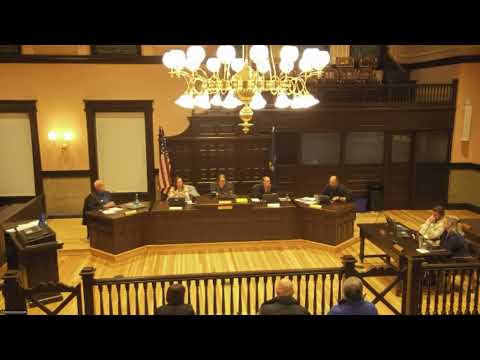
A commissioner moved to approve the year-end transfers and Resolution No. 26-05 authorizing transfers from the equipment reserve fund to the general fund pursuant to KSA 19-119; the motion passed 5–0.
Staff said the transfers are a strategic step in the county’s debt reduction and cash-management plan and that they preserve fund balances to respond to emergencies and avoid immediate tax increases.