
Kentucky committee delays peer-support registration deadline, creates work group
Get AI-powered insights, summaries, and transcripts
Subscribe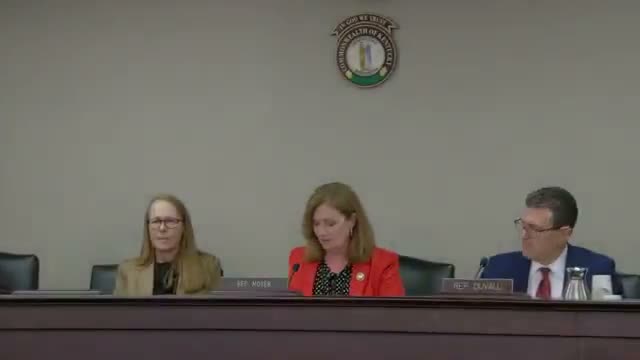
Summary
The Kentucky House Health Services Committee approved House Bill 470 as amended to delay a peer-support registration deadline established in House Bill 505, authorize a working group to recommend a credentialing body by 11/01/2026, and remove limits on hours for registered alcohol and drug peer specialists, aiming to stabilize a strained workforce.
The Kentucky House Standing Committee on Health Services voted to approve House Bill 470, a measure that delays an implementation date from earlier legislation and establishes a working group to recommend an oversight structure for peer support roles.
Sponsor remarks and supporters said the bill will give credentialing boards and the Cabinet for Health and Family Services more time to promulgate regulations after implementation problems tied to House Bill 505 created a backlog and a workforce shortage. "Since January 1, Kentucky has experienced a peer support workforce shortage caused by implementation challenges from House Bill 505," said Elena Sweezy, a social worker and lobbyist with Lane 13 Consulting, who testified for the bill. She said the bill includes an emergency clause and requires the working group to deliver recommendations for an evidence-based credentialing body by 11/01/2026.
Supporters described the bill as largely technical but necessary. The committee substitute, which the panel adopted earlier in the hearing, removes limits on the maximum number of direct-client-care hours that may be provided by a registered alcohol and drug peer support specialist and allows a temporary alcohol and drug support specialist to be reimbursed at the same rate as a registered peer support specialist.
Not all testimony supported the measure without reservation. Frank Miller Jr., an attorney representing Grin Grant Inc., argued a legal problem remains: the statute asks the Cabinet to promulgate regulations related to Medicaid without providing an enabling statutory change to create a new Medicaid benefit. "It attempts through a new section of KRS 2 22 to effect changes in insurance, in particular Medicaid benefits or coverage or eligibility simply by telling the cabinet for health and family services to promulgate regulations," Miller said, adding that without statutory authorization the regulation may be unenforceable and vulnerable to challenge.
Operational questions also surfaced. Sarah Vaughn of Med Bill Consultants asked how behavioral health multi-specialty groups that primarily serve mental-health patients will be treated when they also provide services for substance-use disorders, and whether the state would cover peer-support services if CMS declined to fund them. Committee members pressed about the cost of training for peer specialists, with testimony citing a wide range of training fees from roughly $75 up to $600 depending on provider and format.
The committee took a roll-call vote on HB 470 as amended by the committee substitute; the chair announced the bill "passes with favorable expression." Multiple members recorded 'Yes' or 'Aye' on the roll call; two members asked to explain or 'pass' on their vote during roll call. The measure also directs the creation of an informal work group to consult with the Department for Behavioral Health, Developmental and Intellectual Disabilities within the Cabinet for Health and Family Services on oversight and training standards.
The committee's action does not immediately change Medicaid benefits. Legal concerns raised during testimony focus on whether statutory language provides the necessary authorization for any resulting regulations. The bill now moves forward according to committee procedure.