Get AI Briefings, Transcripts & Alerts on Local & National Government Meetings — Forever.
DOE: data centers and backup generation helped during storm; department says centers can lower average electricity costs
Loading...
Summary
At a DOE briefing officials said data centers provided steady loads useful to the grid during the storm and that backup generation at industrial sites helped avoid blackouts; DOE said it will publish additional analysis on demand and price effects.
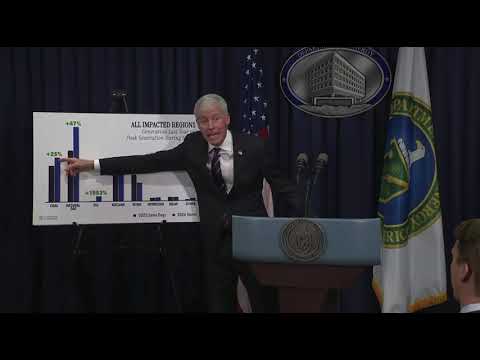
WASHINGTON — Department of Energy officials told reporters that data centers were among the large, steady loads that helped utilities manage tight margins during the winter storm and that industrial and commercial backup generation was used in some regions to avoid outages.
"Data centers is [a] huge issue," Secretary Wright said, calling data centers a pathway to lower electricity prices when their steady load increases average utilization of existing assets. He said DOE has worked with hyperscalers on arrangements that can include upfront capital and fixed‑price electricity deals.
When asked how much backup generation was used, Wright said "hundreds of backup generating sites were turned on and used" and added that at tight margins even 100 megawatts can be meaningful to avert load shedding. He did not provide a firm nationwide megawatt total.
Reporters pressed on whether data centers raise utility costs for local customers. "In the short answer, no," Wright said, adding that demand growth has been concentrated in lower‑cost markets and that states with renewable portfolio standards tend to have higher retail prices — a comparison he repeated without presenting supporting data during the briefing.
DOE officials framed data centers as an economic and reliability opportunity when paired with sensible arrangements, but they acknowledged community concerns about local impacts and said DOE will publish more data and analysis.
What happens next: DOE said it plans to release broader data on electricity trends and continue coordination with industry on interconnection, tariffs and the technical details of integrating large new loads.