Council honors city-funded violence-prevention groups Pushing Progress Philly and Endangered Kind
Loading...
Summary
Council adopted resolutions honoring Pushing Progress Philly (P3) and Endangered Kind for community-based violence-intervention work; program leaders described evidence-based outreach, summer risk concerns, and a citywide "Project Tour 2026."
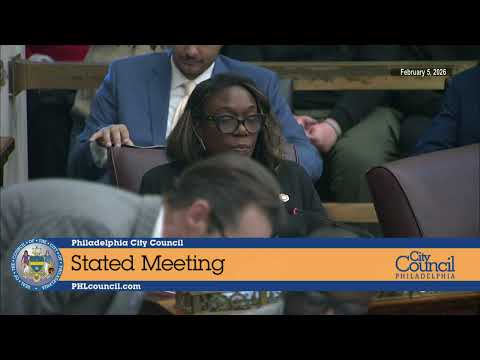
Philadelphia City Council used part of its Feb. 5 session to honor two community organizations that provide street-level violence interruption and youth supports.
The council adopted a resolution recognizing Pushing Progress Philly (P3), a city-funded initiative within the Division of Safe Neighborhoods. Councilmember Cindy Bass read the resolution and invited program leadership to the podium. Dr. Kareem Brown, introduced as P3’s program director, said the city’s recent decline in shootings and homicides is the result of deliberate investment in "evidence-based strategies, credible messengers, cognitive behavioral interventions, relentless outreach, transitional employment, and community-centered violence prevention." He cautioned the coming summer will test the city’s ability to sustain that progress.
Council also honored Endangered Kind and its founder, John Solomon, for grassroots outreach. Solomon described an expansion plan—"Project Tour 2026"—to visit 13 sections of the city to listen and scale services; he framed violence prevention as connected to housing, jobs and access to health care.
Why it matters: Council members said the recognitions highlight the city’s strategy to pair government investment with community-led work that interrupts cycles of violence. Leaders asked for continued funding and interagency coordination to sustain positive outcomes.
Both resolutions were adopted by voice vote; council members invited staff and program participants to join photos at the front of chambers.