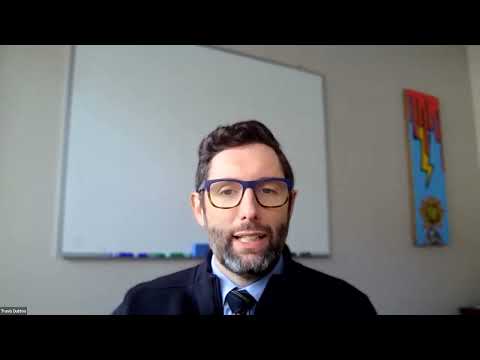
WSAC policy coordinator outlines bills affecting county solid‑waste programs
Loading...
Summary
Travis Dutton of the Washington State Association of Counties briefed Thurston County’s Solid Waste Advisory Committee on a slate of solid‑waste bills — including a proposed new revenue bill (HB2018), a bottle‑deposit proposal (HB1607), paint‑care expansion, mattress EPR and other producer‑responsibility measures — and urged local engagement ahead of key session cutoffs.
Travis Dutton, policy coordinator for the Washington State Association of Counties, told Thurston County’s Solid Waste Advisory Committee that several pieces of legislation this session could materially affect county solid‑waste operations and funding.
Dutton described House Bill 2018 as a county‑backed revenue proposal intended to replace some funds counties lose as diversion programs expand; he said it would phase in a 2.5‑percentage‑point increase to the existing solid‑waste tax over five years but cautioned the bill faces political resistance to new taxes. He also summarized a set of textile‑extended‑producer‑responsibility proposals now framed as a needs‑assessment study rather than an immediate EPR obligation.
Dutton highlighted House Bill 1607 — commonly described in the meeting as a statewide bottle‑deposit proposal — as one of the session’s higher‑profile items. He said manufacturers (aluminum, glass and plastic producers) and some zero‑waste groups are the principal backers because the program guarantees cleaner, more affordable recycled feedstock, while grocery stores, hospitality and some retailers oppose the changes. He noted the bill was amended to remove a requirement for rural counties to site redemption facilities at transfer stations, addressing a major county concern.
On product stewardship, Dutton said counties support expanding the existing paint‑care program to include aerosols and other paint products, and he expected counties to sign in pro on that bill. He also described ongoing work on mattress EPR bills and a variety of packaging and bag‑fee proposals; one pending bill would phase out single‑use plastic bags and keep paper‑bag fees at eight cents after amendment.
Dutton warned the committee that an unrelated Senate bill (numbered in the transcript as SB5989) would reallocate aircraft‑fuel revenue in the hazardous‑substances account and could indirectly pressure funds counties use for hazardous‑waste programs.
Committee members asked questions about who is driving the bottle‑deposit measure and how rural counties would be affected; Travis and Thurston County staff (Jeff Bickford) responded that impacts vary by county and that the WSAC is working to protect rural and frontier county needs while supporting broader recycling goals.
The presentation concluded with a reminder of legislative timing: Dutton said the meeting occurred after the first cutoff and that the next fiscal and house‑of‑origin cutoffs could move many measures quickly. He encouraged SWAC members to sign in, submit constituent comments, or coordinate with their legislators ahead of committee deadlines.
Next steps: WSAC and Thurston County staff plan to sign in pro on selected bills where counties have technical or funding concerns and to monitor fiscal committee movement. Dutton provided contact information for follow‑up.