Wausau seeks neighborhood input on nonindustrial future of 1300 Cleveland Avenue
Loading...
Summary
City staff held a packed neighborhood engagement session to solicit public rankings of nonindustrial land‑use options for the city‑owned 1300 Cleveland Avenue parcel, explain MRL‑12 zoning constraints and a 30‑day survey, and outline next steps including ED committee review and a DNR presentation next month.
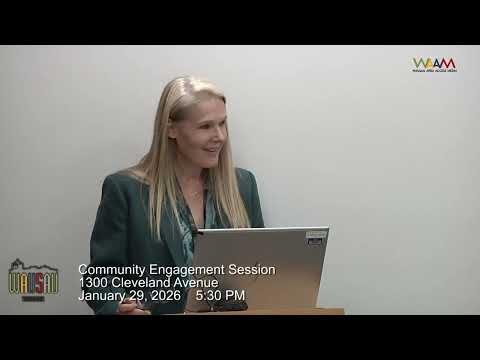
City staff on Thursday told a packed Wausau neighborhood meeting that the city is seeking public input on nonindustrial uses for the city‑owned 6.77‑acre site at 1300 Cleveland Avenue and will accept a public survey for 30 days before forwarding results to the Economic Development Committee.
The meeting, convened to gather neighborhood preferences, opened with an overview from the city’s economic development and community development staff. Assistant city planner Carrie Edmondson and city planner Brad reviewed zoning context, saying the parcel is zoned MRL 12 (a multifamily residential district that the presenters described as roughly 12 units per acre). Staff noted some preferred uses would fit the existing MRL 12 zoning while others — such as larger commercial or institutional uses — could require rezoning or conditional use permits.
City staff described a 20‑item survey that attendees were asked to take during the meeting (paper or via a QR code) and noted the survey will remain open for 30 days and be posted on the city’s public page. ‘‘If you know friends or neighbors who couldn’t attend, please share this information,’’ staff said. The compiled results will be delivered to the Economic Development Committee for its consideration.
Staff read definitions and examples of proposed nonindustrial uses, including active and passive outdoor recreation, duplexes and townhouses, mixed‑use or live‑work buildings, grocery or retail, group day care, community or senior centers, and senior housing. They emphasized the difference between uses permitted by right in MRL 12 and conditional uses that require Planning Commission approval and possible stipulations.
Throughout the presentation, residents asked practical questions about responsibility for maintenance of public uses, likely timelines for private development and the role of market demand, and where specific proposals such as adult day services might fit within the code. Staff said write‑in fields on the survey can capture uses that do not neatly match the listed categories and encouraged attendees to provide details so city staff can code those suggestions appropriately.
Staff repeated that this engagement is an early, broad phase of decision‑making: ‘‘We’re really at the top of the funnel trying to figure out what we’re talking about here,’’ a staff member said, describing later, more detailed design work that would follow only after preferences are narrowed.
The meeting closed with contact information for follow‑up questions and a reminder that the DNR will present on brownfields programs at the next neighborhood meeting so the public can ask technical remediation questions on the record. Staff reiterated the 30‑day survey window and asked residents to attend next week’s Economic Development committee meeting if they wish to give formal public comment.
The city did not announce a firm development schedule; staff said private‑sector interest, remediation requirements and any incentives would shape timing if a nonindustrial use moves forward.