Benton County child-protection staff warn ICWA-era changes will vastly increase caseloads and costs
Loading...
Summary
Child-protection leaders told commissioners Benton County logged 773 maltreatment reports and opened 182 investigations in 2025; staff cautioned that a 2027 change expanding active-effort requirements (related to ICWA/disproportionate-representation rules) could push nearly all cases to that standard and sharply raise staffing needs and costs.
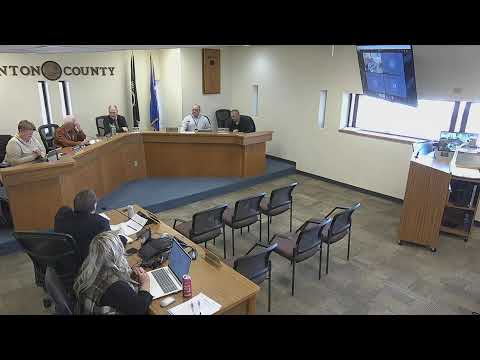
Sandy, accompanied by deputy director Will Chu and CP supervisor Rachel Columbus, presented Benton County child-protection statistics for 2025 and warned of an impending change that could substantially increase workload and costs in 2027.
Staff reported 773 child-maltreatment reports in 2025 and 182 opened investigations or assessments. "In 2025, we had 57 kids in care," they said, down from 63 in 2024; the county completed eight adoptions and carried 14 pending into 2026.
Sandy and Will explained that an upcoming change tied to Indian Child Welfare Act implementation (beginning in 2027) will require 'active efforts' in many more cases. Will told the board the county had only five ICWA-designated cases in 2025 but estimated that under the new definition of 'disproportionately represented' nearly every case could be affected. "We did estimate it's gonna be anywhere from 97 to 99% of our cases," Will said, explaining that local demographics and economic status mean most families would meet the revised criteria.
Commissioners expressed concern about staffing and funding implications. One commissioner noted that even a modest increase in active-effort cases could require additional employees and significant levy increases — "If we took 15 cases, that would be 13 more employees at roughly $75,000 ... that's $1,000,000 dollars more on the levy for next year," a commissioner said during the discussion.
Staff said they are exploring internal repurposing and efficiency strategies and may initially plan for a small number of new positions while advocating for phased implementation or legislative clarification at the state level.
Next steps: staff will continue internal planning, report potential staffing scenarios to the board and join regional advocacy (MICA/AMC) efforts seeking clarification or funding solutions before the law takes full effect.