
House Corrections and Institutions Committee hears UVM findings on H.294, including state cost models and provider complaints
Get AI-powered insights, summaries, and transcripts
Subscribe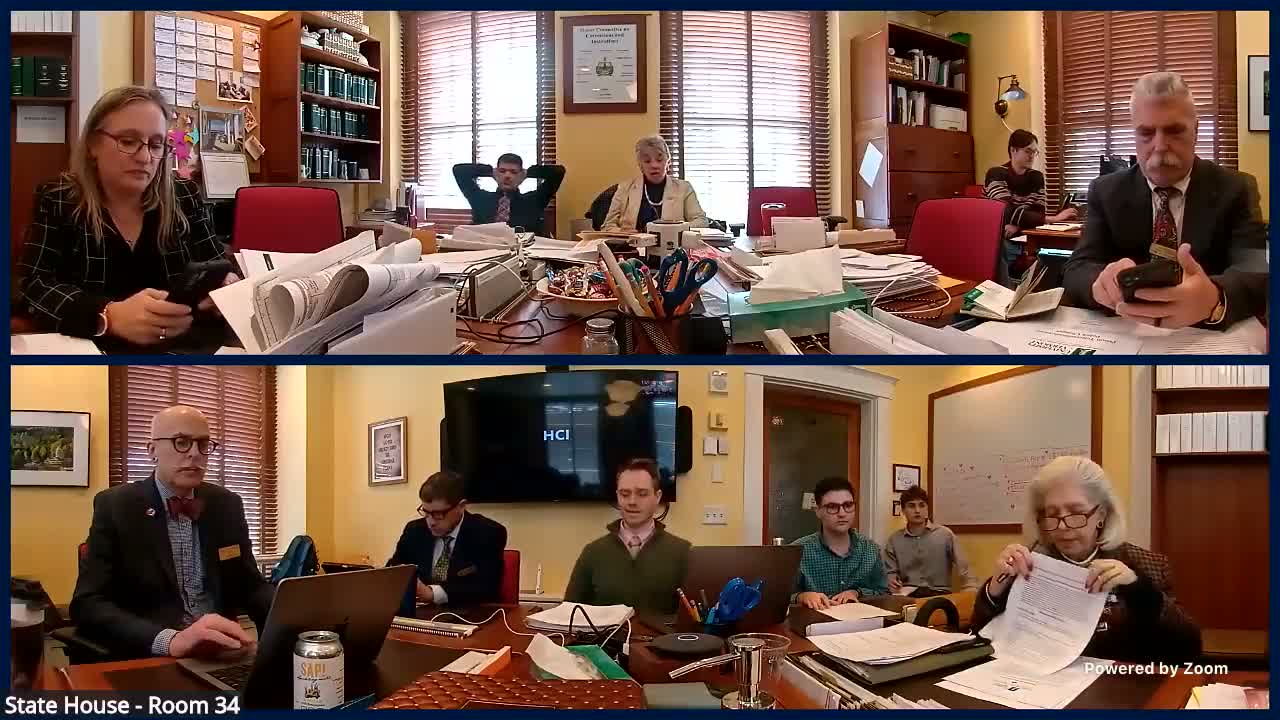
Summary
University of Vermont Legislative Research Service students told the House Corrections and Institutions Committee that state-funded, no-cost prison telecommunications has reduced recidivism in other states but carries initial cost spikes; presenters also flagged complaints and a lawsuit involving Vermont’s provider, IC Solutions.
BURLINGTON — On Feb. 6 the House Corrections and Institutions Committee heard testimony from University of Vermont Legislative Research Service (VLRS) student researchers on H.294, the bill under consideration that would address telecommunications, commissary and wages in the Department of Corrections.
Kevin McGreal, a VLRS presenter, summarized the team’s literature review and told the committee that studies link maintained family contact to better reintegration outcomes. He cited a Minnesota Department of Corrections review that the presenters said showed a 13% reduction in recidivism correlated with sustained contact, and pointed to a 2014 meta-analysis that highlighted phone contact as particularly influential. “These contacts correlated with a 13% reduction in recidivism,” McGreal said.
The student presenters reviewed other states that have moved to state-funded communications. Theodore Sternberg said California defined telecommunications to include phone calls, electronic messages and video calling, placed oversight with the California Public Utilities Commission, and estimated initial implementation costs at roughly $32,000,000; call minutes rose markedly in the months after the policy change. The presenters told the committee that Massachusetts allocated about $20 million in fiscal 2024 and later faced demand increases, Colorado’s estimate for fiscal 2026 was cited near $5,200,000, and Minnesota’s program was described as costing about $434 per incarcerated person (roughly $3.6 million for fiscal 2024) with a 15-minute wait introduced between calls to manage access.
Committee members and presenters repeatedly noted a common pattern: a pronounced initial bump in call volume after removing user fees, followed by a plateau. Members asked for state-by-state comparisons of baseline access and incarcerated population sizes to help Vermont estimate the likely scale and duration of the initial increase.
Presenters also reviewed Vermont’s contract landscape and provider complaints. Skye Whalen identified the state’s vendor as IC Solutions, a subsidiary within the Keith/ TKC group, and said the research found more than 100 complaints against related entities. Whalen summarized litigation alleging unfair and deceptive practices tied to “released debit cards,” where money remaining in an incarcerated person’s account was delayed or not returned; the presenters said one such case settled for just under $100,000. “There were over a hundred complaints toward the company,” Whalen said.
Several committee members emphasized equity concerns tied to incarcerated wages. One member calculated that, at an average wage of $0.65 an hour cited during the meeting, a 15-minute phone call would represent the equivalent of roughly 40 minutes of labor and a 30-minute video call more than seven hours of labor. That example was cited to show how even modest contact can impose disproportionate costs on people with very low pay.
Presenters and members discussed implementation options raised in other states, including continued contracting with private providers under new oversight structures and the possibility of placing telecommunications under a public-utility regime for regulatory review. Presenters said that most states kept providers but renegotiated contracts rather than fully replacing vendors.
The committee did not vote on H.294 at the hearing. Members asked staff to obtain additional state population and baseline-access data, to verify recent cost and usage figures, and to invite in-person testimony from the Department of Corrections and the Department of Buildings and General Services to discuss current contracts and operational practices.
What’s next: the committee requested further materials and scheduled follow-ups to better estimate fiscal impacts and operational options before any markup or formal recommendation on H.294.