Region 15 enrollment at a low point; district cites staffing gaps and kindergarten waiver uncertainty
Loading...
Summary
Superintendent Carrie Smith told the Regional School District 15 board that October 1 enrollment — the state'snapshot used for budget calculations — is at the trough of a long decline and is projected to flatten with slight growth over 10 years. The district reported roughly 20 paraeducator openings, one unfilled high-school math position, and uncertainty about how a potential universal pre-K would affect capacity.
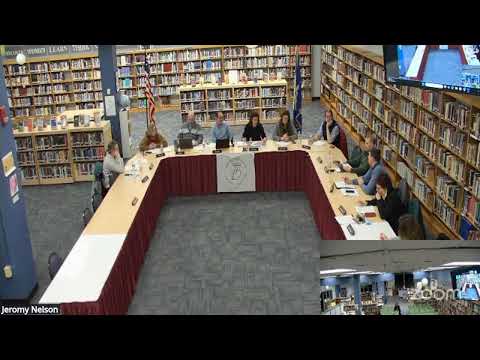
Superintendent Carrie Smith presented the district's October 1 enrollment snapshot and told the board the decline that began in 2015'2016 has reached a low point and is expected to stabilize with modest growth over the next decade. "October 1 is the official state snapshot date," Smith said, noting that that date drives average daily membership (ADM) counts used to calculate town budget obligations.
Smith outlined staffing details tied to those enrollment numbers: the district added six paraeducators in the budget but still lists about 20 paraeducator openings across schools; a high-school math teacher retired and the position remains open but is included in FTE counts while the district evaluates class sizes before deciding whether to refill it. She also highlighted growth in parent-educator positions that accompany students with Individualized Education Programs, and budgeted additions including a learning-center teacher, a district data manager and facilities and security supervisors.
Board members asked whether the enrollment projections incorporate major new housing or development projects. Smith said the demographer and Tekton included only projects already "on the books" or in zoning; unzoned proposals would not be counted. On prekindergarten, Smith said it is unclear whether a move toward universal preschool at the state level would translate into universal public-school pre-K slots. "Our anticipation is to create more capacity in our elementary schools for pre-K. Those would be tuition based. They may be state subsidized," she said.
The presentation also noted a discrepancy between projection and actuals at the elementary level this year: the district expected about 61 more elementary students than actually enrolled, largely driven by kindergarten start-date shifts. Smith warned that such changes have budget implications because October 1 counts determine next year's town budget obligations.
Board members said they appreciated the long-term trend data but pressed for more near-term trackers that tie investments to measurable student outcomes as the district moves into a new budget cycle. The board and administration agreed to provide additional touch points before the end of the school year.