
Committee reviews Marathon County draft comprehensive plan, asks for stronger focus on aging and livability
Get AI-powered insights, summaries, and transcripts
Subscribe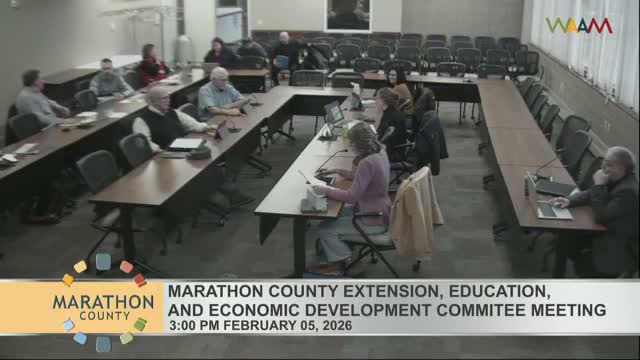
Summary
County staff presented the draft Marathon County 2026 comprehensive plan and committee members urged clearer objectives and strategies for aging‑in‑place, social connection in rural areas, and homelessness, with staff saying those items appear in other chapters and will be refined.
Marathon County planning staff reintroduced the draft 2026 comprehensive plan and asked the Extension Education and Economic Development Committee for feedback on updated goals and objectives as the draft moves toward an executive committee resolution and a March public hearing.
"Chapter 4 really seems focused mostly on housing," said Supervisor Lemmer, urging stronger attention to aging‑in‑place, social connection and services for retirees. "Are we ready with our aging readiness in this community and should that be something we focus and hone in on?" she asked.
Staff responded that objectives and supporting strategies addressing older adults, people with disabilities and cultural resources appear elsewhere in the draft—specifically chapter 3, chapter 11 and the strategy sections carried over from the 2016 plan—and that the final document will include more granular strategies below each high‑level objective. Staff also said Health and Human Services directed adding a specific homelessness objective.
"I think the objective is there about ... enable older adults and people with disabilities to live safely and independently in their communities," a staff member said, pointing to objective language and noting that strategies and implementation steps will be added before final adoption.
Committee members asked staff to ensure the plan explicitly addresses social isolation and transportation gaps in rural areas; staff agreed to review and refine the draft language and strategies before the next milestone, which staff said will be an executive committee action on Feb. 12 followed by a public hearing in March and eventual county board consideration for ordinance adoption.
The discussion did not produce a formal vote; it was a staff briefing and committee feedback session intended to shape the final draft and implementation strategies.