
Amherst pilots Khan Academys AI tutor and outlines cybersecurity upgrades
Get AI-powered insights, summaries, and transcripts
Subscribe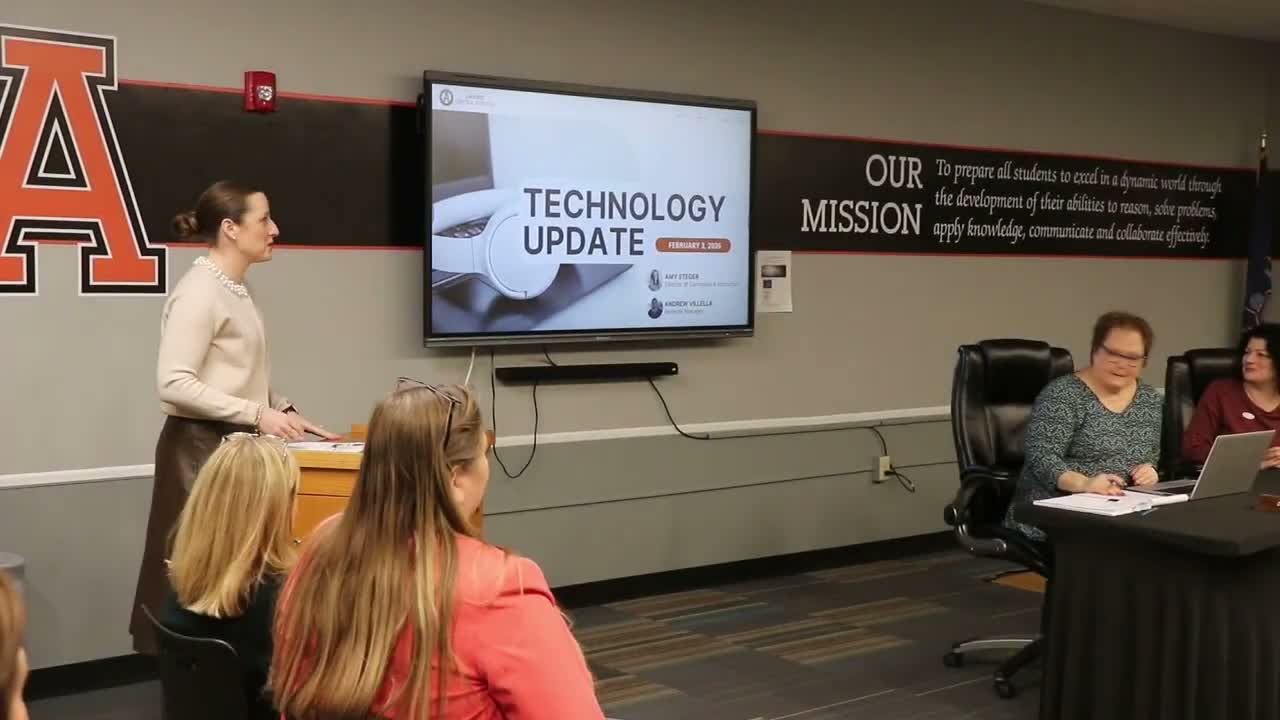
Summary
District technology staff told the board they launched a pilot of Khan Academy Reimagined (Khanmigo) for high‑school students, emphasized human oversight and ED/FERPA compliance, and described infrastructure and cybersecurity work including daily vulnerability scans and new firewalls.
District technology staff briefed the Amherst Central School District Board of Education on instructional-technology work and infrastructure upgrades, including a pilot of Khan Academy Reimagineds AI tutor, commonly known as Khanmigo.
The unnamed district technology presenter said the District Technology Committee selected artificial intelligence as this years study theme and submitted an Instructional Technology Plan covering 2026–2029 to Erie 1 BOCES as a draft on Jan. 15. The presenter said the district began a pilot for grades 9–12 the day before the meeting and added the tool to the district portal (TigerLink). "This is designed for learning, not for cheating," the presenter said, describing the tutor as Socratically trained to ask students guiding questions rather than provide direct answers.
The presenter emphasized safety and oversight: adults can view student interactions, the vendor provides red‑teaming and moderation, and the district will monitor usage and provide teacher training. The district said the tool is designed to comply with applicable privacy requirements and described collecting pilot feedback from teachers and students.
The board also heard technical and cybersecurity updates from technology staff. The district described daily vulnerability scanning, a partnership with a third‑party security operations center (Sedera), deployment of new firewalls at the high school to address bandwidth and security, strengthened backups and disaster‑recovery planning, and a focus on incident‑response playbooks aligned to NIST guidance. The technology team said it is shifting from a break‑fix model to a proactive posture and running frequent scans to prioritize remediation.
The presenter reviewed classroom technology rollouts as well: ClearTouch interactive panels in math and ELL classrooms, Wacom tablets piloted in some classrooms to enable teachers to move while writing, and a marked increase in technology professional development hours. The board was told next steps include continued pilot evaluation, teacher trailblazer groups, and a planned district review of AI personnel policy between the next two meetings.