
Flagstaff fire officials outline funding shortfall for wildfire program, request roughly $692,000 ongoing and $2.4 million capital
Get AI-powered insights, summaries, and transcripts
Sign Up Free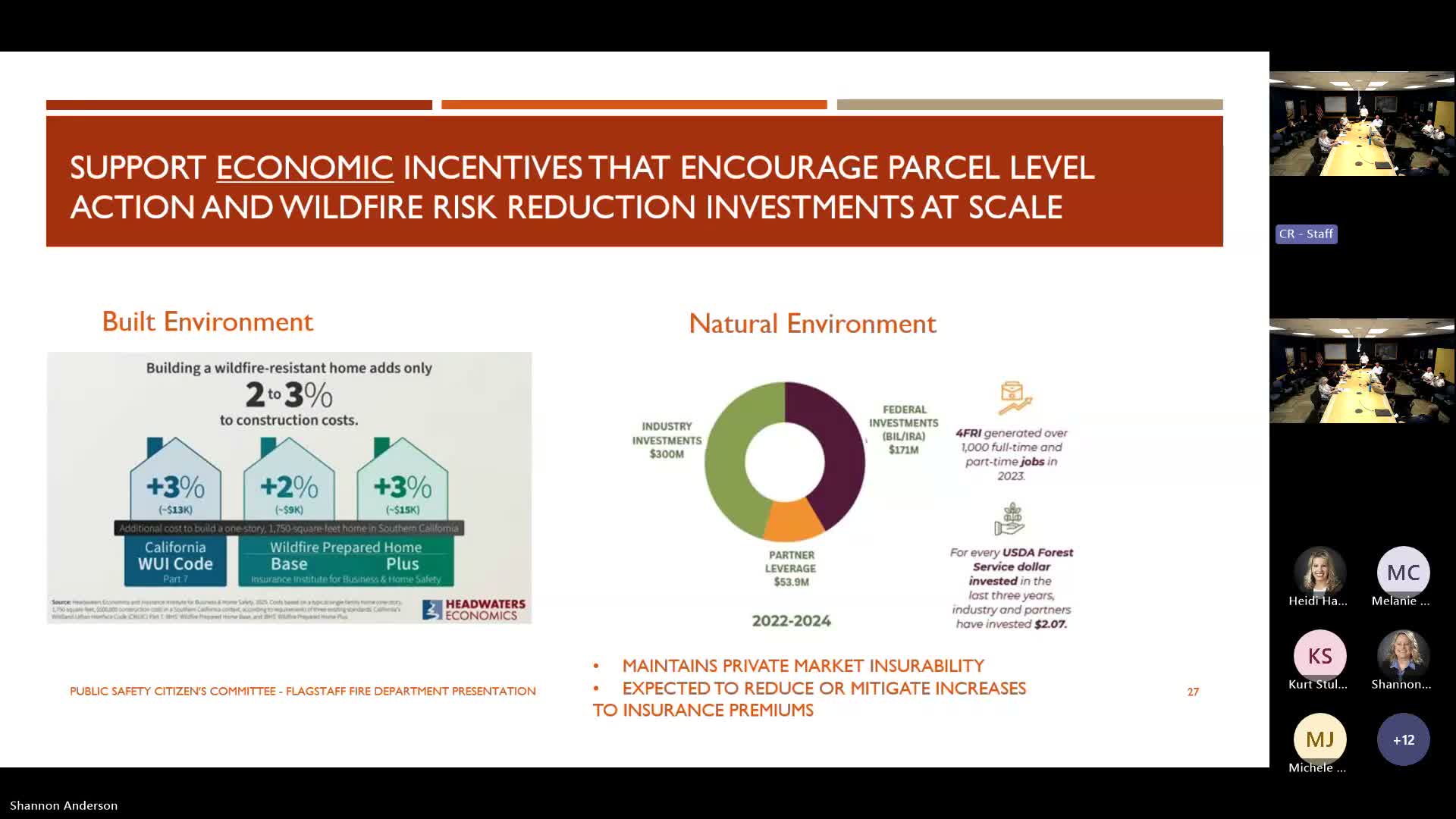
Summary
Flagstaff City—ire management staff told the council the Wildland Fire Management program faces a projected operating deficit and a capital shortfall for a regional training facility, asking the city to close a roughly $692,000 annual gap and a $2.4 million one-time shortfall while maintaining existing mitigation work.
Mark Wilson, deputy chief for Flagstaff City, asked the council to fill a funding gap for the city—ire department fter staff described a broad wildfire risk-reduction program that needs sustained revenue.
Wilson said the Wildfire Resource Infrastructure Protection (WRIP) fee adopted in 2020 built a base for wildfire work but was designed to supplement grant funding, not fully sustain long-term personnel and project costs. He told the council the program projects an operating shortfall and capital needs tied to a new Wildland Fire Management (WFM) training facility and equipment.
Wilson and other department leaders outlined the size of the gaps and the timeline for when grant funding ends. They said the WFM training facility has a state award of $4 million but design and equipment estimates leave a roughly $2 million construction shortfall plus about $165,000 to equip the site; ongoing facility operations were estimated at about $125,000 annually. Separately, staff summarized ongoing operational and contract needs amounting to about $565,000 and identified a total ongoing gap near $692,000 and a one-time capital gap around $2.4 million.
Why it matters: staff said the city lready leverages grants and partner contributions—citing the Flagstaff Watershed Protection Project (a $10 million bond passed in 2012) and nearly $50 million in partner investments—to get more work done per local dollar. Officials argued that without stable local funding the city risks losing capacity for parcel-level home assessments, hazardous-fuel reduction, and maintenance of previously treated sites.
What staff proposed and timing: Wilson said the city is seeking funding options to keep a grant-funded community-risk specialist position in place (staff estimated $127,000 when the grant ends) and to cover contract work for hazardous-fuel reduction and home-hardening incentives. He noted some grants are short-term and that cost projections used when WRIP was adopted did not anticipate recent inflation and personnel cost increases. The department asked the council to consider budget adjustments in coming fiscal planning cycles.
Context and constraints: staff emphasized that many program dollars have historically been matched by partner contributions (they said roughly $1 from the city for every $5 from partners in one chart), and that the WRIP fee is usage-based (tied to water service), creating year-to-year revenue variability. Council members asked about charging other jurisdictions for training at the new facility; staff said the state-funded portion expects regional, non-profit training and that the facility is not designed as a profit center.
Next steps: staff will present detailed budget requests to finance and return with cost options for council consideration. No formal vote was recorded at the presentation.