Get Full Government Meeting Transcripts, Videos, & Alerts Forever!
Get email alerts on the Arbor South topic
No spam. Unsubscribe anytime.
Ann Arbor council approves Arbor South brownfield plan and development agreement after heated debate
Summary
The City Council approved a brownfield/TIF plan and development agreement for the Arbor South project, a roughly $580M mixed-use redevelopment of about 17 acres that includes more than 200 permanently affordable apartments; votes were split amid concerns over the size of the subsidy and how public participation is calculated.
Mayor Taylor and a majority of the council voted to approve a brownfield tax increment financing (TIF) plan and a related development agreement for the Arbor South project, a proposed redevelopment of roughly 17 acres of surface parking on South State and Eisenhower into a mixed-use, transit-oriented neighborhood.
The council approved the brownfield plan (DC1) by roll call after extended public comment and internal deliberations; recorded votes were Yes: Gazi Edwin, Mayor Taylor, Iyer, Dish, Harrison, Watson, Malek, Medina; No: Ackman, Briggs; Absent: Cornell. The subsequent development agreement for 2845 South State Street (DC2) was also approved.
Why it matters: supporters said Arbor South will deliver dense housing near transit, infrastructure improvements, roughly 1,000 new homes citywide connected to the project footprint, and 209–200 permanently affordable apartments to be owned and managed by the Ann Arbor Housing Commission. City staff and the municipal financial adviser told council that, given the level of new public infrastructure required, the project was not financeable under normal market conditions without a substantial TIF subsidy.
What supporters said: several speakers representing businesses, labor and affordable-housing advocates urged approval. Jason Stoops, a local business owner near the site, said the project would “turn 17 acres of surface parking into a real neighborhood” and stressed the value of nearby workforce housing. Council members backing the plan said it aligns with the city’s TC1 transit-corridor goals and will deliver both market-rate and income-qualified housing.
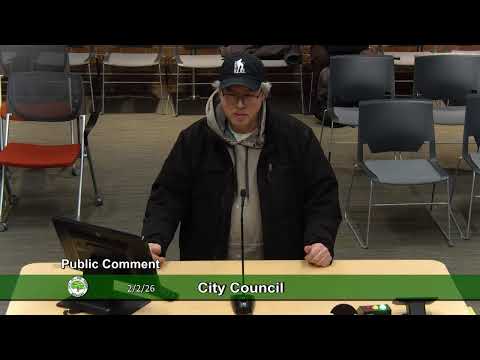
What opponents said: opponents argued the brownfield participation exceeds the city’s 20% guidance and prioritizes structured parking in the list of eligible reimbursable items. Kathy Boris, speaking from the 5th Ward, urged a no vote and argued the brownfield plan departs from the city’s brownfield policy and raised potential conflicts of interest linked to developer contributions. Tom Weider called the agreement “what corruption looks like,” and other speakers questioned whether the parcels qualify as brownfields and whether affordable units are sufficiently guaranteed.
Financial details and safeguards: staff presented two ways of calculating the public share; one method (excluding interest on reimbursable items) yields a roughly 31% share of project costs in eligible brownfield items, while including statutory interest on reimbursements raises that percentage. Staff noted the project includes contractual conditions tying brownfield approval to an affordable-housing development agreement and other performance provisions intended to ensure delivery of promised public benefits.
Council direction and next steps: the approval conditions the brownfield reimbursement on execution of the affordable housing development agreement and requires performance assurances in the development agreement. City staff said additional implementation work and monitoring will follow as the parties execute contracts and phases of construction proceed.
Quote: Member of the public Tom Weider warned, “This is what corruption looks like,” while proponents responded the public investment is required to build the infrastructure that makes the housing possible.
Outcome and procedural note: DC1 passed on roll call; DC2 was approved by council vote. The council’s decisions set the stage for implementation work between the city, the developer, and housing partners.