Get Full Government Meeting Transcripts, Videos, & Alerts Forever!
Get email alerts on the Special Education topic
No spam. Unsubscribe anytime.
Ross Local director outlines rising special-education caseloads, programs and funding
Summary
Director of Special Services Becky Morgan told the Ross Local Schools board that special-education enrollment has steadily increased while total district enrollment has fallen, described curriculum and assessment tools (Unique Learning Systems, reading interventions, progress monitoring) and detailed federal and state funding streams, including an IDEA Part B allocation of about $592,000.
Becky Morgan, Ross Local Schools' director of special services, told the school board the district is midway through its second year of a one‑plan focused on boosting outcomes for students with disabilities and aims "to increase their growth index on the state report card in both English language arts and math by 2027."
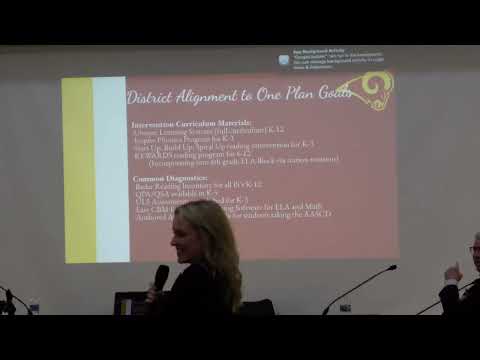
Morgan outlined curriculum and interventions the district uses for students with identified disabilities, including the Full‑K–12 Unique Learning Systems (ULS) curriculum, Inspire phonics for early grades, Start Up Build Up Spiral Up for struggling readers in grades K–5 and the Rewards program piloted for grades 6–12. She said the district has adopted common diagnostic tools and progress‑monitoring software (beta reading inventory and easyCBM) so intervention specialists can track student growth.
Morgan explained the legal distinction between Individualized Education Programs (IEPs) under the federal Individuals with Disabilities Education Act (IDEA) and Section 504 plans (referred to in the meeting as "504"), which fall under the Americans with Disabilities Act and provide accommodations rather than specially designed instruction. "An IEP literally spells out what that service looks like," Morgan said. "504 falls under ADA…they're not receiving specially designed instruction, but they might need a little bit of support in the classroom."
She presented five‑year enrollment figures showing a decline in total district enrollment alongside a steady increase in special‑education identification. As an example, Morgan cited the 2021–22 headcount of 2,763 students with 556 identified for special education and described that trend as ‘‘steady but manageable’’ and consistent with state patterns.
On English‑language‑learner supports, Morgan said the district has 18 active ELL students and 11 in monitoring status; Title III funding for ELL programming was reported as $2,707. She described supports including a part‑time ESL tutor, Rosetta Stone as a supplemental tool, and instructional coaching through an educational service center contract.
Turning to finances, Morgan said the district's IDEA Part B federal allocation is about $592,000, funds she said are used for salaries, retirement benefits and related services such as a speech‑language pathologist placed at the Queen of Peace site and about 12 paraprofessionals districtwide. She also noted state support funding of roughly $612,000 and reimbursements such as an excess‑cost payment (about $19,000) that reduce net costs for high‑cost placements.
Morgan emphasized compliance requirements tied to timelines and alternate assessments — for example, evaluations are required within 60 days and IEPs must be in place within 30 days of eligibility — and said the district had met the indicators released so far on the special‑education report card. She closed with community engagement examples, including a recent True Strength night.
Board members thanked Morgan and her team for their work; Doctor Rice and other trustees applauded the presentation and encouraged attendance at future district events.
The district plans no immediate policy vote on these programmatic issues; Morgan's presentation was informational and will inform upcoming budget and staffing conversations.