Get Full Government Meeting Transcripts, Videos, & Alerts Forever!
Get email alerts on the Auditor Recording Fees topic
No spam. Unsubscribe anytime.
Cowlitz County auditors report record‑fee hikes, declining document counts and push to digitize records
Summary
County auditor’s office reported rising per‑document fees and falling recording volumes, generating more revenue even as fewer transactions are recorded; staff outlined spending rules for those fees, recent increases in funds routed to homelessness programs and plans to replace antiquated recording software with state scanning help and grants.
COWLITZ COUNTY — County finance staff and an auditor’s office representative reviewed long‑term trends in recording activity and the auditor’s budget, warning that higher per‑document fees have coincided with declining document volumes and prompted questions about consistency and statutory interpretation.
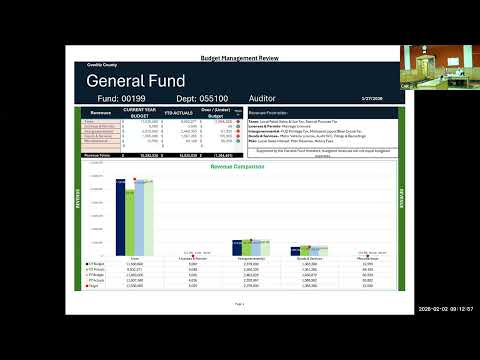
Finance director Sean Roy opened the auditor budget review, saying the auditor’s general fund tax budget is about $11.5 million and year‑to‑date collections stood near $9.9 million with a two‑month accrual. Auditor’s staff then walked commissioners through two decades of recording counts and fee changes.
“Back in 2005, the total number of documents that we recorded in our office was 37,366. The total number of recorded documents that recorded last year, 18,205,” the auditor’s office presenter said, calling out a long‑term decline in transactions even as the per‑document fee rose. The presenter said the current single‑page recording fee is $303.50 and added: “that decline is a direct result of people avoiding the fee.”
Staff said the county’s recording revenue has grown largely because fees were raised and some new fee surcharges were added: recording receipts were about $2.78 million in 2023, roughly the same in 2024, and staff projected higher collections for 2025. The auditor’s office also identified portions of recording fees that are statutorily designated for homeless housing programs and provided annual allocations that staff said went to eviction/homelessness prevention contracts and other consolidated homeless grants.
Commissioners and staff discussed how title companies and customers respond to high fees by changing filing practices. The auditor noted differing county interpretations of the recording statute — some counties charge a full fee for repeated document copies while others (including legal counsel advising the auditor’s office) interpret some repeated references as not requiring a duplicated full fee.
On technology and records preservation, staff said the county has contracted with Washington State Archives to scan and index legacy records transferred to state custody during a 2020 record move. The auditor said she secured two $50,000 grants (totaling $100,000) to offset scanning costs but cautioned that indexing timelines at the state archive have been slower than expected.
“Everything’s already digitally recorded” in many newer workflows, staff said, but older paper inventories remain and the auditor’s O&M fund — limited by statute to certain uses — may be tapped for software upgrades, scanning and preservation. Commissioners asked whether O&M funds could be directed toward upgrading Laserfiche/Laserfish workflows and whether a dedicated recording staff position should be reinstated.
The auditor’s office warned the legislature is considering multiple bills that affect recording and licensing fees and staff workload, including proposals touching privacy protections for recorded documents and additional enforcement mechanisms tied to vehicle registration. The auditor said many pending bills carry fiscal notes and that her office is monitoring dozens of bills affecting elections, licensing and recording.
The county did not take formal action at the meeting. Staff said they would follow up on statutory questions about where specific filings must be recorded and provide commissioners with more precise revenue breakout figures on request.