
Board clarifies Fulton County—s role in warming centers amid criticism and volunteer response
Get AI-powered insights, summaries, and transcripts
Subscribe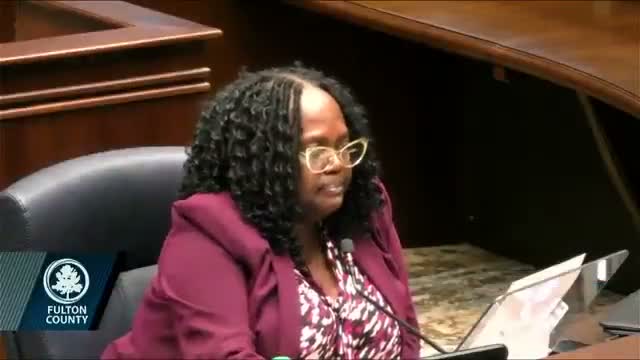
Summary
After winter storms, commissioners and staff debated whether the county should operate or only coordinate warming centers. County staff said the role is coordination and transportation support, while local volunteers described citizen-led emergency responses and asked for clearer county policy and communications.
A Feb. 4 discussion among Fulton County commissioners, staff and community volunteers centered on who should provide warming centers during extreme cold. Dr. Rochelle, speaking for county emergency management and behavioral-health coordination, said warming centers are "an emergency management discretionary protective action" and that the county—s role is coordination and gap support (transportation, cots), not operating the sites.
Commissioners and volunteers recounted instances in which citizen groups and nonprofits stood up short-term solutions in North Fulton and Roswell when existing centers were closed for the evening. Kelvin Thompson, a citizen-volunteer who said he led a citizen command center, said volunteers worked with municipal fire, police and nonprofits to place people in hotels and provide transportation and wraparound services.
Several commissioners urged the county to adopt a formal policy and improve communications with municipal emergency-management functions. "If EMA is the home for this, bring back a recommended policy for the board's consideration," Commissioner Marvin Arrington Jr. said. Commissioner Moe Ivory and others said the county should be willing to provide bridge resources (for example, small emergency hotel grants) when cities and nonprofits face immediate need.
County staff told the board they already budget for transportation and other limited supports for warming and cooling events and that federal regulations tied to certain grants limit the county—s role to planning and coordination rather than direct operation.
The board asked staff to convene municipal partners and continuum-of-care organizations to recommend a policy that clarifies roles, communications and options for rapid response during extreme weather.